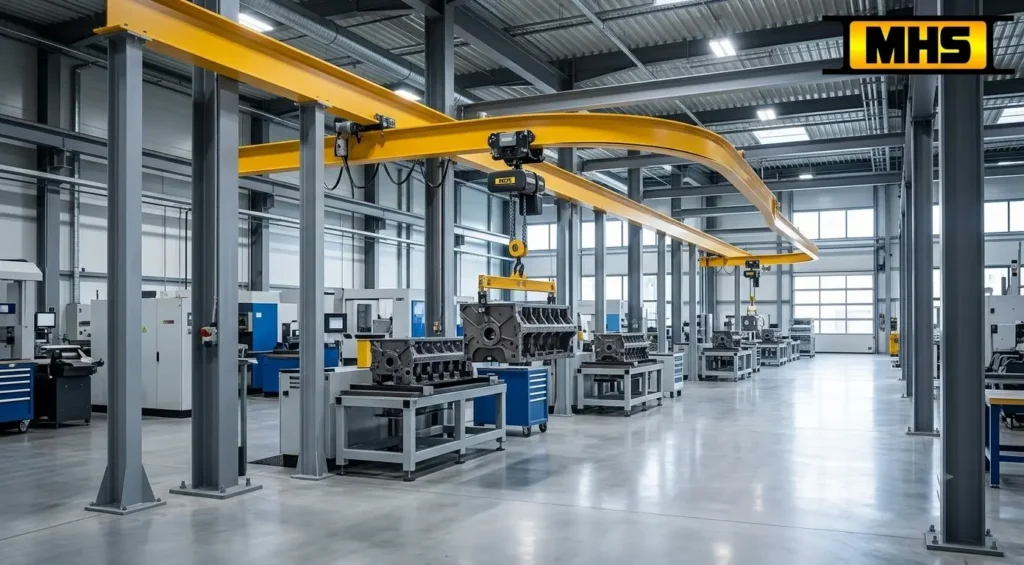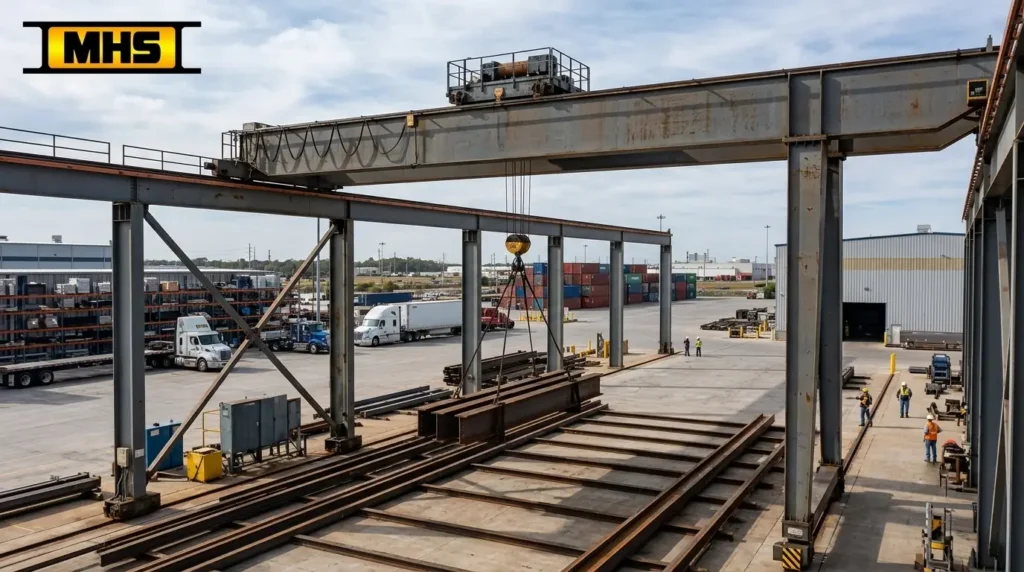

Below the hook lifting devices are load-handling attachments that connect to a crane or hoist hook to grip, support, balance, or position a load during a lift. Common examples include lifting beams, spreader beams, coil lifters, plate clamps, vacuum lifters, and lifting magnets. The right device depends on the load’s weight, shape, material, lifting points, and working environment, and on the crane that carries it.
Quick Summary:
- A below-the-hook (BTH) device sits between the crane hook and the load.
- The device’s own weight counts against the crane’s rated capacity.
- Match the device to the load’s shape, material, and center of gravity, not weight alone.
- ASME B30.20 covers use and inspection. ASME BTH-1 covers design.
- Inspect before use, and never modify a device without engineering approval.
Facilities usually start researching below the hook lifting devices after a problem with standard rigging. Slings crush a coil edge, a long beam sags, a plate slips, or a repetitive lift takes too long to set up. This guide covers what these devices do, the main types, how they work on an overhead crane, how to choose one, and how to keep it safe.
This guide is general information. Confirm requirements against the current standards, your manufacturer’s documentation, and a qualified engineer.
What Are Below the Hook Lifting Devices?
Below-the-hook lifting devices are specialized attachments that hang from a crane or hoist hook and hold, support, or position a load. They handle loads that a bare hook or basic rigging can’t lift safely or efficiently.
The lifting path runs in one line: crane hoist, hook, below-the-hook lifting device, load. The attachment is the part that actually contacts or captures the load. It might grip a plate, cradle a coil, spread slings apart, or hold sheet metal by suction.
People use several names for the same category: below-the-hook lifting equipment, BTH lifting devices, lifting attachments, and crane lifting attachments. You may also hear “under the hook” devices. In every case, the device is part of the lifting system and has its own rated load.
BTH Devices vs. General Rigging Equipment
Rigging equipment, such as slings, shackles, and hooks, links a load to a lifting point. A BTH device is usually a more specialized, engineered structure or mechanism. It often has its own design standard, rated capacity, and inspection requirements.
| Factor | Below-the-Hook Lifting Device | General Rigging Equipment |
| Main purpose | Grip, support, balance, or position a specific type of load | Connect a load to the hook |
| Design | Engineered structure or mechanism, often welded or powered | Standardized components like slings and shackles |
| Load contact | Often contacts or captures the load directly | Contacts the load through lifting points or wraps |
| Typical examples | Lifting beams, coil lifters, vacuum lifters, magnets | Wire rope slings, alloy chain slings, synthetic slings, shackles |
| Governing standards | ASME B30.20 and ASME BTH-1 | Sling and hardware standards such as ASME B30.9 and B30.26 |
The two work together. A lifting beam may use slings and shackles to connect to a load. The beam is the BTH device. The slings and shackles are the rigging hardware.
What Are Below the Hook Lifting Devices Used For?
These devices are used to lift, move, support, and position loads whose shape, size, weight, or surface makes standard rigging unsafe or inefficient.
Typical uses include:
- Steel plates, coils, and sheet metal: Clamps, magnets, and coil lifters protect the material and speed up handling.
- Pipes, beams, and long materials: Spreader and lifting beams keep long loads level and sling angles under control.
- Machinery, equipment, and heavy components: Custom fixtures grab known lifting points on awkward, heavy load lifting jobs.
- Loads with few or unusual attachment points: Vacuum lifters and gripping devices create a hold where no lug exists.
- Balanced, stable handling: Devices with adjustable pick points or a fixed frame help control load balance and load stability.
- Repetitive production lifts: Dedicated devices cut setup time and reduce handling variation on a line.
Industries that rely on them include steel processing, industrial manufacturing, metal fabrication, construction materials, glass and panel handling, and warehousing. A steel service center might lift steel coil all day with a C-hook. A fabricator might use a lifting beam for weldments and a plate clamp for stock. A glass shop might use a vacuum lifter for panels.
Types of Below the Hook Lifting Devices
The main types are lifting beams, spreader beams, magnets, coil lifters, plate lifting devices, vacuum lifters, and custom attachments. Each is built for a particular load type and handling method.
| Device | How It Holds the Load | Best For | Key Watch-Outs |
| Lifting beam | Supports the load from two or more pick points, mostly in bending | Wide or long loads, equipment, weldments | Headroom lost to beam depth, center of gravity |
| Spreader beam / bar | Spreads slings apart, loading the bar mainly in compression | Long, flexible, or wide loads | Sling angle, bar buckling limits |
| Lifting magnet | Magnetic force on ferrous material | Plate, sheet, blanks, steel stock | Thickness, surface, temperature, power loss |
| Coil lifter (C-hook, coil grab) | Captures or grips the coil | Steel and other industrial coils | Coil size, weight, edge protection |
| Plate clamp / lifting clamp | Mechanical grip on plate edges | Steel plate, vertical or horizontal | Plate thickness, hardness, orientation |
| Vacuum lifter | Suction on a sealed surface | Sheet metal, glass, panels | Surface condition, porosity, vacuum reserve |
| Custom attachment | Engineered to the load | Unusual shapes, repetitive tasks | Engineering review, documentation |
Lifting Beams
A lifting beam supports a load through two or more pick points hanging below the beam. The beam carries the load mainly in bending. The crane hook picks at the center, and the lifting points sit at set or adjustable positions.
Lifting beams suit wide, heavy, or awkward loads. They keep slings vertical, which avoids the capacity loss that comes with angled slings. Adjustable and multi-point versions let one beam handle several load sizes. Some people call a rigid structure a lifting frame. A lifting frame and a lifting beam aren’t always the same design. A frame may form a closed or multi-member structure that surrounds or cradles the load, while a beam is typically a single main member. Check the rated load and drawings for the actual device, not the name.
Spreader Beams
A spreader beam (or spreader bar) holds the top ends of slings apart so they can come to the hook at an angle. The bar mainly resists compression. This makes it useful for long, wide, or flexible loads such as pipe, structural steel, and large panels. It also keeps slings from crushing the load’s sides.
The difference from a lifting beam is the force path:
- Lifting beam: Slings hang vertically from the beam, and the beam bends.
- Spreader beam: Slings run from the beam ends up to the hook at an angle, and the bar compresses.
Because spreader slings are angled, sling tension goes up as the angle flattens. Both the bar and the slings must be rated for that geometry. Modular spreader bars and adjustable designs let one device cover several spans, but each configuration needs its own rating.
Below the Hook Lifting Magnets
Lifting magnets hold ferrous material without mechanical gripping. The main types are permanent magnetic lifters, electromagnetic lifters, and electro-permanent designs. They are common for steel plates, sheets, blanks, and other suitable metal stock.
A magnet’s real capacity depends on more than its nameplate. It drops with:
- Thinner material
- Rough, rusty, painted, or scaled surfaces
- Air gaps between magnet and load
- Low-carbon or alloyed grades with lower magnetic response
- Elevated temperatures
- Partial pole contact
Always match the magnet to the material, thickness, surface condition, and conditions of use. Electromagnets also need a plan for loss of power. Many include backup power or alarms, and the user must understand them. Treat the manufacturer’s capacity charts as the starting point.
Coil Lifting Devices
Coil lifters handle steel and other industrial coils. Common designs include C-hooks, which pass through the coil’s inner diameter and cradle it from below, and coil grabs or coil hooks that grip the coil. They protect edges and let operators set coils down without a sling underneath.
Select by coil outer and inner diameter, width, weight, and orientation, such as eye-to-sky or eye-to-wall. A C-hook sized for the wrong inner diameter can damage the coil or hold it unevenly. Orientation changes the center of gravity, which affects how the device balances.
Plate Lifting Devices
Plate clamps and other plate attachments grip metal plates by its edges. Orientation matters:
- Vertical lifting clamps lift a plate from the top edge while the plate hangs vertically. Some also help turn plates from horizontal to vertical.
- Horizontal plate lifting uses clamps in pairs or sets, often with a spreader or lifting beam, to keep the plate flat.
Selection depends on plate thickness range, weight, hardness, surface condition, and lifting orientation. A clamp used outside its thickness range may grip poorly. A clamp not rated for the load angle can slip. Never pick up a plate with a clamp the manufacturer didn’t rate for that use.
Vacuum Lifting Devices
Vacuum lifters use suction pads to hold and move suitable materials such as sheet metal, glass, panels, and some finished goods. They suit fragile material lifting and applications where clamping marks aren’t acceptable.
Key factors:
- Surface condition: Porous, rough, oily, or uneven surfaces reduce hold.
- Vacuum capacity: The pad area and vacuum level determine lifting force, with a safety margin.
- Backup safety features: A vacuum reserve and low-vacuum warning give the operator time to land the load if power or vacuum drops.
- Load orientation: Tilting or rotating loads changes the force on the pads.
Other Common BTH Devices
Many applications use more specialized devices:
- Lifting tongs and grapples for scrap, logs, and loose material
- Die turners and drum turners for rotating and positioning dies or drums
- Pallet lifters and sheet lifters for palletized load handling
- Load-containing lifters for loose or bulk items
- Gripping lifters and mechanical lifters that clamp the load mechanically
- Powered devices, including hydraulic, pneumatic, and electrically powered lifting devices, for gripping, rotation, or tilting
Don’t confuse crane-hung devices with forklift attachments. They share some names and designs, but forklift attachments mount on the truck and have their own standards and rated capacities.
Custom Below-the-Hook Lifting Attachments
A standard device is fine when the load is common and the lifting need is ordinary. Custom-engineered lifting devices make sense when the load is unusual, the pick points are fixed and specific, the process repeats many times a day, or standard devices don’t fit the crane’s headroom.
Custom devices are engineered lifting devices designed for one application. They may include custom lifting fixtures that locate the load precisely. Engineering review comes before fabrication. It covers load cases, center of gravity, structure, welds, safety factors, and documentation. A device built without that review may look right and still be unsafe.

How Do Below-the-Hook Lifting Devices Work with Overhead Cranes?
A BTH device hangs from the crane or hoist hook and carries the load below it. The crane lifts the device and loads it together, so the device’s weight counts against the crane’s capacity.
The load path is: hoist, hook, lifting lug or bail on the device, device structure, lifting points or gripping surface, load. Slings, shackles, and other rigging components may sit in the chain between the hook and the device, or between the device and the load.
Three things need attention.
Capacity stack-up. A crane’s rated load must cover the load plus the device plus any rigging. If a crane is rated for 10 tons, and the lifting beam weighs 1.5 tons, the usable load is 8.5 tons at most, before accounting for slings. Both the crane and hoist equipment and the device must be rated high enough.
Hook and attachment compatibility. Check the hook throat opening, hook type, and latch against the device’s lug or bail. Common attachment types include plate-style bail and pin-style bail. The hook should seat the bail properly. Do not force it.
Headroom and hook height. Every device uses vertical space. A deep lifting beam plus slings can cost real height. In low-headroom lifting applications, compact beams, short-sling designs, or a different device type may be needed. Confirm the crane’s minimum hook height and the building clearance with the device installed. See our guide on how girder and trolley style affect headroom.
This is why below-the-hook devices for overhead cranes should be selected with the crane in mind. For more on hoist and trolley choices, see our comparison of chain and wire rope hoists.
How to Choose the Right Below-the-Hook Lifting Device
Choose a device based on the load, lifting method, crane configuration, operating conditions, and applicable safety requirements. Confirm the choice with the manufacturer or an engineer when the load is unusual.
Load Weight and Rated Capacity
Confirm the actual weight of the load, not just the nominal weight. Add the device’s own weight and any rigging. Check the rated load capacity of every component: crane, hoist, hook, device, slings, and hardware. The system is only as strong as the lowest-rated piece. Terms like working load limit and safe working load appear on different components, so read the markings carefully.
Load Shape, Size, and Material
Decide whether the load is flat, round, long, wide, or irregular. Match the device to the material and its surface. A magnet suits a clean steel plate and not aluminum. A vacuum lifter suits sealed sheets and not rough castings. Find the center of gravity. A lift with the hook off the center of gravity will tilt, and load balance problems often start here.
Lifting Points and Load Control
Identify where the load can safely be attached or supported. Decide if one, two, or multiple load attachment points are needed. Think about load control: how much tilt, swing, or rotation the process allows, and whether the device must hold, rotate, or flip the load. Check the risk of slipping when the load is positioned or set down.
Crane and Hoist Compatibility
Check capacity after subtracting the device’s weight. Confirm hook fit, available headroom, lifting height, and travel clearances. Consider whether the crane has the speed range and control for the job. For frequent, precise lifts, variable speed control improves load positioning.
Operating Environment and Frequency
Heat, moisture, dust, chemicals, and outdoor weather all affect device life. Magnets lose capacity as temperature rises. Vacuum pads respond to dust and oil. Welded structures in corrosive settings need coatings or materials chosen for corrosion resistance. Also consider how often the device is used. A device for occasional use differs from one cycling hundreds of times per shift, because fatigue life and service class matter.
Standard vs. Custom Lifting Devices
| Situation | Standard Device | Custom Device |
| Common load shape and weight | Usually fits | Rarely needed |
| Unusual shape or fixed pick points | May not fit | Often the better choice |
| Repetitive production lifts | Possible | Can cut setup time and handling variation |
| Tight headroom | May not fit | Can be designed around it |
| Documentation and traceability | Manufacturer data | Engineering package and drawings |
| Lead time and cost | Lower, faster | Higher, longer |
A standard device is often enough for plate, sheet, and ordinary beams. Custom designs earn their cost when they replace an improvised setup or prevent a repeated safety risk. Ask for documentation that shows the design basis, rated load, and any limits on use.
Quick-Match Guide by Load Type
| Load | Common Devices to Evaluate |
| Steel coil | C-hook, coil grab, custom coil lifter |
| Steel plate (flat) | Plate clamps with a spreader or lifting beam, magnets |
| Steel plate (turning vertical) | Plate turning clamps, lifting clamps |
| Sheet metal | Vacuum lifter, magnet (ferrous), sheet lifter |
| Glass and finished panels | Vacuum lifter |
| Long pipe or beam | Spreader beam, lifting beam |
| Palletized loads | Pallet lifter, lifting beam with forks |
| Drums | Drum turner, drum lifter |
| Dies and tooling | Die turner, custom fixture |
| Irregular equipment | Adjustable lifting beam, custom lifting fixture |
Use the table as a starting point. Confirm the exact device against the load and the manufacturer’s limits.
What Does a Below-the-Hook Lifting Device Cost, and How Long Does Custom Work Take?
Cost depends on capacity, complexity, materials, and whether the device is standard or custom. Custom work adds engineering time and fabrication lead time.
Main cost drivers:
- Capacity: Heavier devices need more steel, larger welds, and stronger pins and bails.
- Type: Powered or vacuum devices cost more than a simple fixed beam.
- Adjustability: Adjustable and modular devices add parts and ratings to verify.
- Design category and service class: Higher cycle counts require more conservative design.
- Documentation and testing: Engineering calculations, proof testing, marking, and certification add cost, and they add value.
- Finish and environment: Coatings and special materials for harsh conditions raise prices.
Compare lifetime value, not price alone. A cheap device that damages loads, takes longer to rig, or fails inspection costs more over time. Ask suppliers about lead times early. Custom designs can take weeks or longer, depending on engineering and fabrication.
Below-the-Hook Lifting Device Safety and Inspection
BTH devices need proper selection, inspection, maintenance, and operation to reduce the risk of equipment failure and dropped loads.
Inspection Before Use
Before each use, or each shift where the standard and your program call for it, check:
- Cracks, deformation, bent members, or corrosion
- Welded lifting devices for cracked or damaged welds
- Hooks, pins, latches, and lifting lugs for wear, distortion, or missing parts
- Gripping mechanisms, clamp jaws, pads, and moving parts for wear and free movement
- Magnet faces and vacuum pads for damage, debris, and leaks
- Equipment marking and identification tags for readability, including rated load
If any rated-load marking is missing or unreadable, remove the device from service until it’s resolved.
Periodic Inspection and Maintenance
Inspection intervals depend on the device, service conditions, manufacturer guidance, and applicable standards. Heavier or more frequent service shortens the interval. Periodic inspection is typically more detailed than a pre-use check and may involve disassembly or nondestructive examination, depending on the device.
Maintenance covers lubrication, replacement of worn parts, and repairs made to the manufacturer’s or engineer’s requirements. Keep records. A history of inspections, repairs, and findings helps spot trends and supports an audit. Remove a device from service when it shows cracks, permanent deformation, damaged welds, slipping, worn grips beyond limits, or any condition the manufacturer lists as a removal criterion. Proof testing may be required after certain repairs or alterations, so check the standard and the manufacturer.
Safe Operating Practices
- Never exceed the device’s rated capacity or the lowest-rated component in the system.
- Confirm the load is secured and balanced before lifting. Test lift a short distance when appropriate.
- Keep personnel clear of the suspended load and the travel path.
- Use trained operators and riggers, and follow the manufacturer’s instructions.
- Never modify, weld, drill, or repair a device without engineering approval.
- Watch for dynamic loading and shock loading during starts, stops, and landing.
Good crane operator training and rigging safety practices matter as much as the device. A well-built device can still fail when used outside its limits.
Applicable Safety Standards
ASME B30.20 is the main standard for use, inspection, testing, and maintenance of below-the-hook lifting devices. It covers structural and mechanical lifting devices, vacuum lifters, magnets, and grapples.
ASME BTH-1 sets design criteria for these devices, including design category, service class, and design factors based on duty and fatigue.
OSHA requirements and other applicable standards may also apply depending on the equipment, industry, and workplace. OSHA 1910.179 addresses overhead cranes, and OSHA 1910.184 addresses slings. Always check the current rules for your jurisdiction and ask your manufacturer which edition a device was designed to.
Common Mistakes When Selecting Below-the-Hook Lifting Equipment
- Choosing by capacity alone. Shape, material, center of gravity, and orientation matter just as much.
- Ignoring the center of gravity. An off-center pick tilts the load and can overload one pick point.
- Using the wrong device for the material. Magnets on non-ferrous metal, or vacuum pads on porous surfaces, won’t hold.
- Forgetting the device’s own weight. It reduces the crane’s usable capacity.
- Using incompatible hooks or rigging. A hook that doesn’t seat the bail, or hardware with a lower rating, weakens the system.
- Overlooking headroom and clearance. The device can cost the hook height the job needs.
- Skipping inspections and maintenance. Wear and cracks grow quietly.
- Using damaged or modified equipment. Field changes void the design basis without engineering approval.
- Treating custom as a shortcut. Custom devices need design review, marking, and documentation, not just fabrication.
Who Designs and Reviews Lifting Devices?
Qualified engineers design BTH devices to ASME BTH-1, and manufacturers or qualified providers fabricate, mark, and document them. The user is responsible for selecting a suitable device and using it within its rating.
A properly documented device includes a rated load, an identification tag, and design records. For custom devices, ask for calculations, drawings, material certifications, weld records, and any test results. If you’re modifying an existing device, get engineering approval first. When unsure whether a device fits your crane and application, review it with a crane engineer or a qualified lifting equipment supplier before the first lift.
Find the Right Lifting Equipment for Your Application
The right below-the-hook lifting device improves load handling, control, and efficiency when it’s selected to fit the load, the crane, and the working conditions. A poor match slows operations, damages material, and adds safety risk.
MHS Crane provides industrial material handling and crane solutions, including overhead crane installation, inspection, maintenance, repair, and modernization. We can review your crane, hoist, and lifting requirements and help you identify what your application calls for. Contact MHS Crane to discuss your lifting requirements and equipment needs, and confirm the specific attachment options available for your project.
Frequently Asked Questions
Q: What are below the hook lifting devices?
A: They are attachments that hang from a crane or hoist hook to grip, support, balance, or position a load. Examples include lifting beams, spreader beams, magnets, coil lifters, plate clamps, and vacuum lifters. They connect the crane to loads that a bare hook or basic rigging can’t handle safely.
Q: What are below the hook lifting devices used for?
A: They lift, support, position, and transport industrial materials such as steel plate, coils, sheet metal, pipe, machinery, and palletized loads. They are also used for loads with few lifting points and for repetitive production lifts. The right device improves load control and reduces handling damage.
Q: What are the most common types of below-the-hook lifting devices?
A: The most common types are lifting beams, spreader beams, lifting magnets, coil lifters, plate clamps, vacuum lifters, and custom attachments. Each suits different materials and shapes. Die turners, drum turners, and grapples cover more specialized jobs.
Q: What is the difference between a lifting beam and a spreader beam?
A: A lifting beam carries the load through vertical pick points and is mainly loaded in bending. A spreader beam holds angled slings apart and is mainly loaded in compression. Sling angle matters for spreaders, so rate the slings and bar for the actual geometry.
Q: What is the difference between below-the-hook devices and rigging equipment?
A: A below-the-hook device is a specialized, engineered attachment that grips, supports, or positions a load. Rigging equipment, such as slings and shackles, connects a load to a lifting point. The two often work together, but each has its own rating and inspection needs.
Q: How do you choose the right lifting attachment for an overhead crane?
A: Start with the load’s weight, shape, material, center of gravity, and lifting points. Subtract the device’s weight from the crane’s capacity and confirm hook fit and headroom. Then consider the environment, frequency of use, and whether a standard or custom device fits.
Q: Do below-the-hook lifting devices need to be inspected?
A: Yes. They need inspection before use and periodic inspection based on service, manufacturer guidance, and applicable standards such as ASME B30.20. Damaged, unmarked, or modified devices should be removed from service until a qualified person approves them.
Q: Can below-the-hook lifting devices be custom-designed?
A: Yes. Custom designs suit unusual shapes, fixed lifting points, repetitive handling, or tight headroom. Engineering review should come before fabrication, and the finished device should carry a rated load marking and documentation.
Q: Does the weight of a lifting device reduce my crane’s capacity?
A: Yes. The crane lifts the device, rigging, and loads together. For example, a 1.5-ton beam on a 10-ton crane leaves about 8.5 tons for the load and rigging, so always subtract the device weight.
Q: Are magnet capacities the same for all steel?
A: No. Magnet capacity depends on material thickness, surface condition, air gap, steel grade, and temperature. Use the manufacturer’s capacity chart for your actual material, and don’t rely on the nameplate rating alone.