
Overhead Bridge Crane
Industry-Leading Overhead Bridge Cranes for Over 35 Years
Selecting the right overhead crane hoist or bridge configuration is critical to facility efficiency. MHS evaluates your building’s structural capacity to determine if a top-running overhead crane for maximum headroom and capacity, or an under-running bridge crane for maximum floor space by attaching directly to the roof structure, is the superior fit. Within these systems, we further refine the design based on span and load requirements to select a single-girder or double-girder overhead crane .
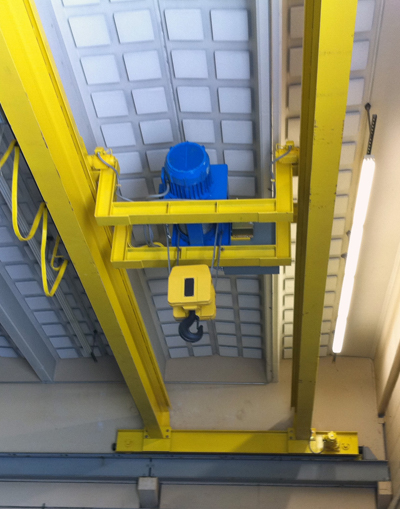
Double Girder
Top Running - Up to 20 ton capacity, Up to 120 feet span
Under Running - Up to 15 ton capacity, Up to 200 feet span (Multi-Runway Cranes)
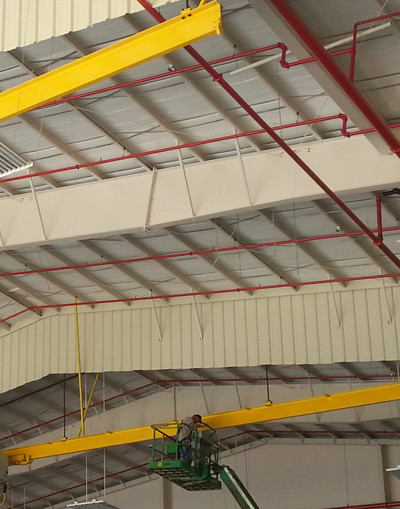
Single Girder
Top Running - Up to 20-ton capacity, Up to 120 feet span
Under Running - Up to 20-ton capacity, Up to 120 feet span
Defining Superior Value in a Crane Proposal
Evaluating The Technical Superiority Within an MHS Crane Quote
While other brands may offer these features as optional add-ons in their overhead bridge crane quote, MHS integrates them as standard equipment to guarantee system longevity. From our headquarters in Pompano Beach, we provide the technical depth of an industry leader alongside the direct accountability of a long-term partner.
All of our control boxes are UL508A certified, approved, and labeled. Although most companies use UL components, they do not certify the entire control box. Many localities (and, we are told, eventually all) have changed their code to require the control box bear a UL508A or other approved label on the front. Most customers do not find this out until it is too late. Field certification can cost tens of thousands of dollars.
Other companies use SO or tray cable to power the end-truck motors to save costs. Most systems with plug-in connectors do not comply with the National Electrical Code. Although they may tell you different this is a violation of the National Electric Code – 610-11 – Conductors SHALL be enclosed raceways (raceways are defined as “an enclosed channel designed expressly for holding wires…”) or be metal clad cable (AC, MC, of MI) with the exception of festooning, Short lengths to collectors, or pendant cable.
MHS wheels are hardened to 380-420 Brinell. Other companies use cast wheels that are much softer. Cast wheels typically last 1/2 to 1/3 as long as hardened steel wheels and can cost over $10,000 to replace. Hardened steel wheels typically last well over 20 years.
Standard on trolleys and bridges. Although required on all cranes and on some hoists, many companies do not provide it as standard.
We have the best technicians and installers in the world. Every person on our team is trained never to replace a part unless they know why it failed.
MHS offers a 3–year warranty. In many cases, at no cost. We can do this because we design and build with quality and durability.
This ensures straight, parallel runways, reducing wheel wear. We recently replaced 4 cranes and realigned the runways at a cost of over $150,000 (the cranes were less than 10 years old). The customer saved a few thousand dollars on the original installation. Obviously, no company is going to admit that they do not properly align runways. Check with our regular customers on our quality -Rolls-Royce (Florida and Washington), Gradau Steel (Peru, Florida, and Georgia), and many others throughout the world. They have found the quality of our product, service, and installation to be excellent. MHS has averaged almost 20% annual growth over 15 years, mostly through referrals.
Flat cable is specifically designed for festooning. Other companies save costs by using round cable or running individual wires in a nylon cover. NOTE: The covers we have seen are not UL–approved.
Our engineering department can solve your problems. We have designed such things as a New Year’s ball lowering systems to special carts that move cooling chambers at nuclear power plants. We have upgraded capacity systems cost-effectively (in one case, from 10 to 30 tons without changing the runways or footers) and built specialty, very low-headroom cranes (in one case, 10″ headroom on an 8-ton, 40-foot crane).
MHS offers lease options. A 5–year lease with a $1.00 buyout at the end costs as little as 2% of the crane’s price per month. In many cases, your payment will be less than half of your monthly labor savings.
Although a brake or other non–coasting mechanism is required, many companies do not provide it as standard. Brakes are standard on MHS cranes.
We do not use quick disconnects. Other companies have spun quick disconnects into a plus. There are several reasons this is not true:
- Each disconnect is a potential failure point. Sales personnel will tell you these rarely fail. The government spends several hundred dollars per connector to reduce the failure rate. The connectors used on cranes only cost several dollars. If they were so reliable, why would people spend several hundred dollars when failure matters?
2. Although the broken disconnect is easier to install than a wire without a disconnect, the wire assembly must be purchased. This assembly is more expensive and must be sourced from the manufacturer. Your system may be down while you wait for parts from the factory.
We use angle welded to the crane to support our festoon. Many companies use bolted track. Although easier to install and less costly, we have seen this bent in several instances due to pendant weight.
The NEC requires fusing on the input of transformers. MHS fuses both input and output to protect the line and the transformer.
Hook bolts allow for proper alignment of runways. The manufacturer calls for splice plates on all rail joints. Although required by the manufacturer, we have seen many systems without splice plates at joints and seen several systems with the rail welded to the runway beam (the rail is high–carbon steel and cannot be welded with standard welding rod).
To operate a crane safely, the operator must know how to use it properly. We provide operator training with each crane to ensure your operators know how to safely and efficiently operate your new crane and to comply with OSHA requirements.
All our cranes are painted with marine–grade epoxy. Epoxy is a stronger and much more costly paint. We do this because we are proud of our cranes and want to provide a product that will look good for decades.
All of our cranes come with durable C–track festooning. Our festoon trolleys have metal roller bearings for long life, not plastic wheels or bushings.
The columns used on systems supported from the floor are several times larger than required for loading. We realize that forklifts occasionally run into columns, and we oversize our columns to withstand all but the worst of these collisions.