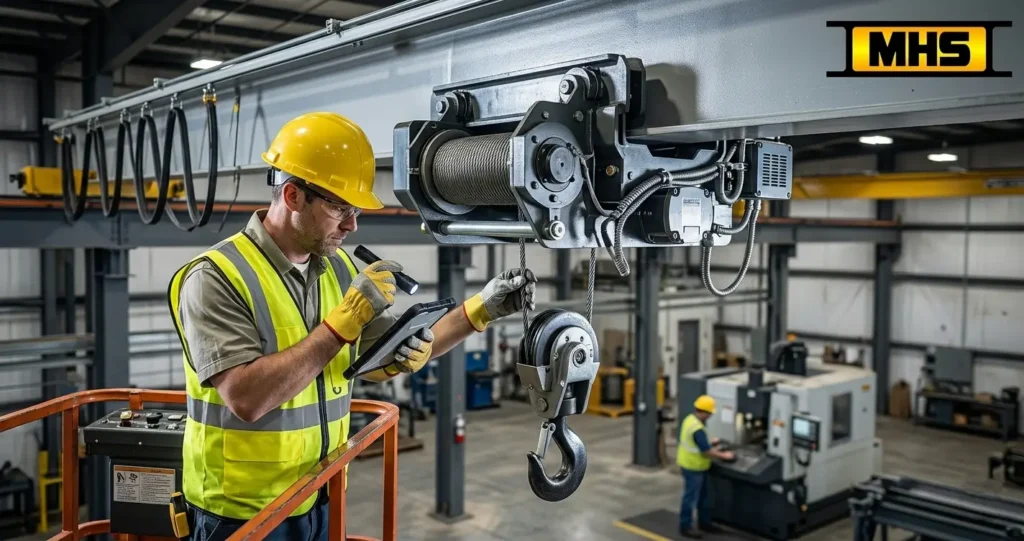
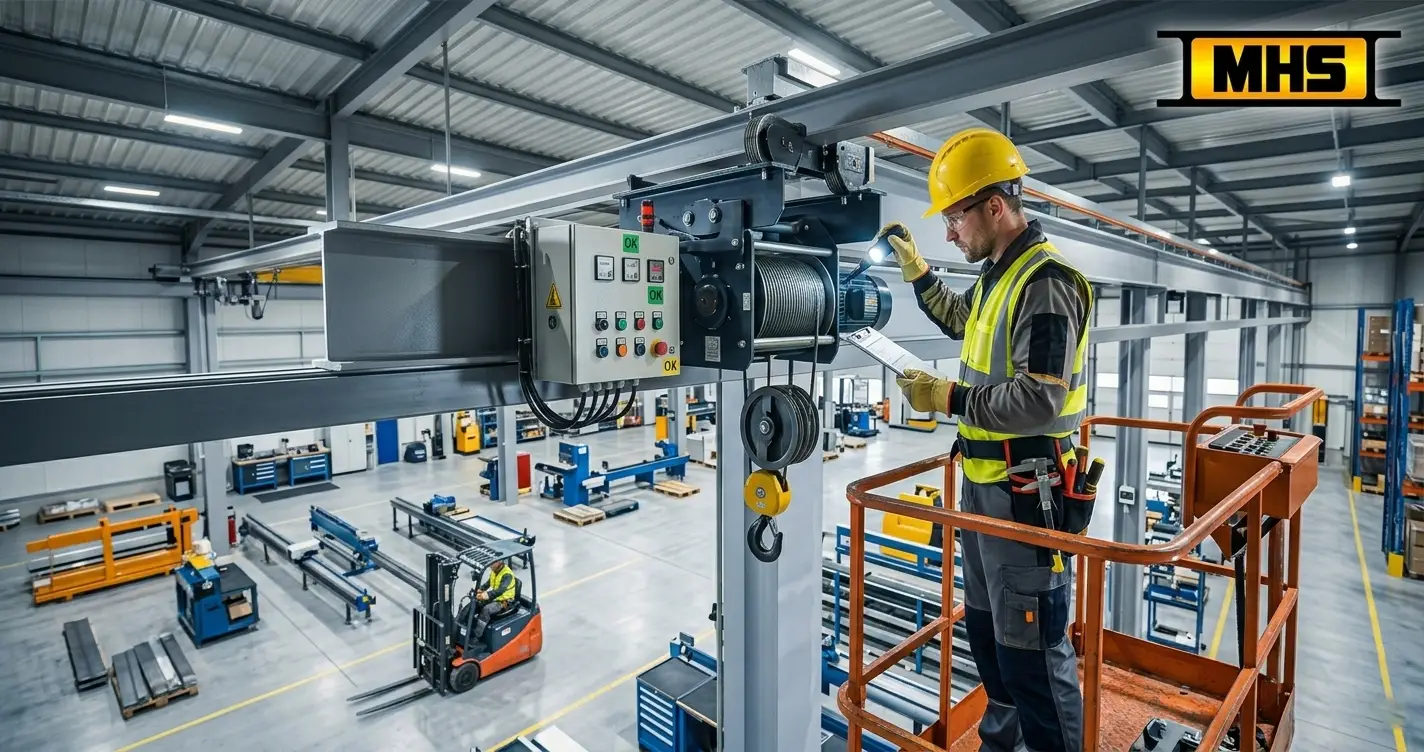
Overhead crane maintenance is the routine process of inspecting, servicing, and repairing cranes to keep them safe and fully operational. It covers everything from checking wire ropes and brake systems to lubricating gears and testing load capacity. For any facility that relies on material handling equipment, proper maintenance is not optional ; it is essential.
Why Overhead Crane Maintenance Is Critical
Skipping crane maintenance puts people and operations at serious risk. A worn brake system or damaged load chain can cause a crane to drop its load without warning. That is a safety hazard no facility can afford.
Beyond safety, poor industrial crane maintenance leads to costly downtime. When a crane fails mid-operation, production stops. Repairs become more expensive, and deadlines get missed.
There is also a compliance side. OSHA has clear crane safety maintenance standards, and failing to meet them can result in heavy fines or a full work stoppage. Staying on top of maintenance keeps your crew safe and your facility compliant.
When to Do Overhead Crane Maintenance
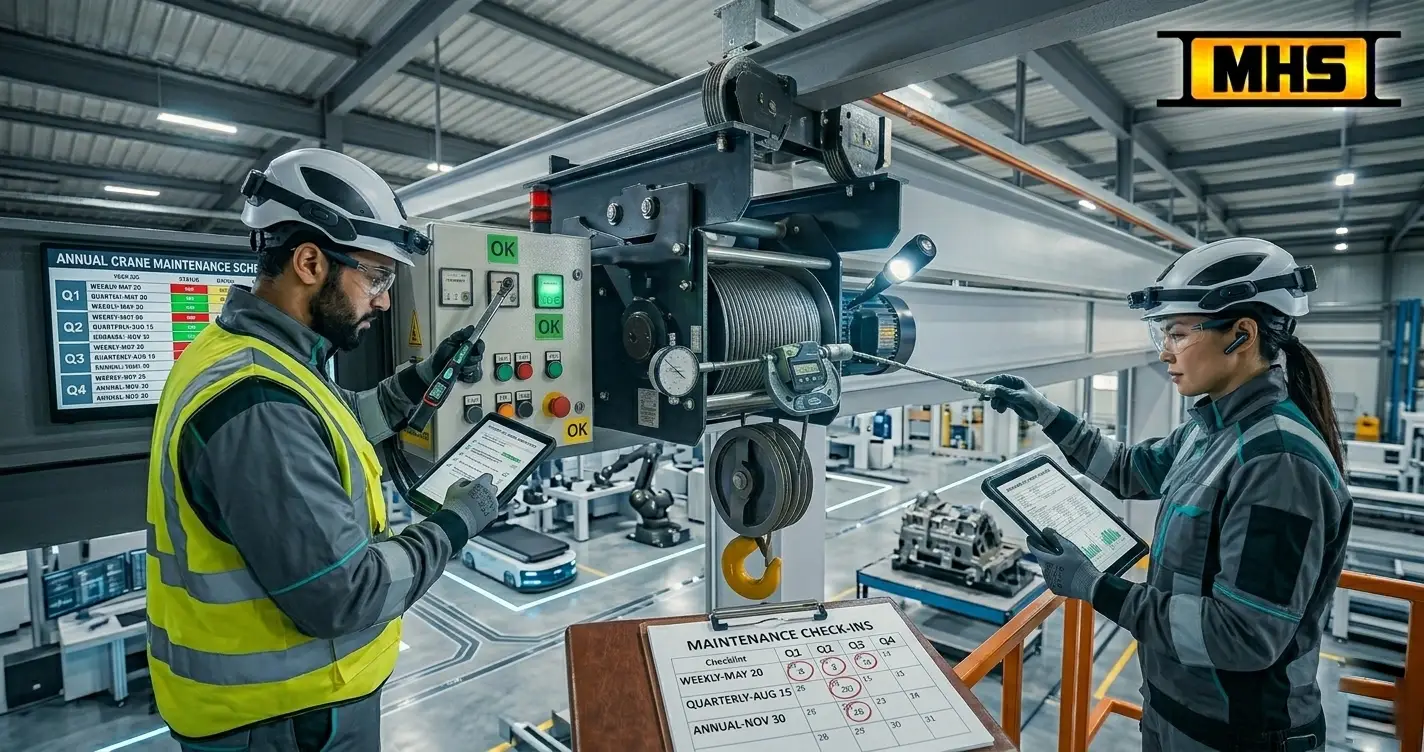
The right crane maintenance schedule depends on usage, load frequency, and the working environment. Here is a simple breakdown:
- Daily: Pre-operational inspection before every shift
- Weekly: Check hooks, brakes, controls, and visible wear
- Monthly: Lubrication, hoist system checks, and wear assessment
- Annual: Full structural inspection, load testing, and electrical review
If you notice unusual noises, slow response times, jerky movements, or visible corrosion and rust, do not wait for the next scheduled check. These are signs your crane needs maintenance right away.
Overhead Crane Preventive Maintenance Explained
Overhead crane preventive maintenance means servicing your crane on a set schedule before problems occur. It is the opposite of reactive maintenance, where you only fix things after they break.
|
Preventive Maintenance |
Reactive Maintenance |
| Planned and scheduled | Unplanned and urgent |
| Lower long-term cost | Higher repair costs |
| Reduces crane downtime | Causes unexpected downtime |
| Extends equipment lifespan | Shortens crane life |
| Keeps compliance on track | Creates compliance gaps |
A strong preventive maintenance plan increases crane reliability, improves operational efficiency, and keeps your team working safely. It is always the smarter choice.
Overhead Crane Maintenance Checklist (Step-by-Step)
A complete crane maintenance checklist keeps inspections consistent and nothing gets missed. Here is what each inspection period should cover.
Daily Inspection Checklist
Run through these checks before every shift:
- Test all pendant control and radio control functions
- Inspect the crane hook for cracks, deformation, or wear
- Check the brake system for proper engagement
- Look for visible damage on wire ropes and load chain
- Confirm limit switches and overload protection are working
- Listen for unusual sounds during hoist operation and bridge travel
Monthly Maintenance Checklist
Monthly checks go deeper into mechanical condition:
- Apply overhead crane lubrication to gears and bearings, sheaves and pulleys, and crane wheels
- Inspect the hoist system for wear and proper alignment
- Check runway rails for damage or misalignment
- Examine wiring and connections for loose connections or fraying
- Test trolley movement and bridge travel under normal load
- Review and update maintenance logs
Annual Maintenance Checklist
Annual inspections are the most thorough:
- Full structural inspection of all load-bearing components
- Load testing at rated load capacity
- Complete electrical review including contactors and relays, variable frequency drive (VFD), and grounding system
- Gearbox inspection and service
- Review of all service history and compliance documentation
- Operator certification and safety training records check
Key Components to Inspect in Crane Maintenance
A proper overhead crane inspection covers every major system. Here are the critical areas:
- Hoist and lifting system: Wire ropes, load chain, crane hook, and sheaves and pulleys
- Bridge and trolley: Crane wheels, runway rails, and structural components — this is the core of bridge crane maintenance
- Electrical systems: Electrical panels, control system, circuit faults, and variable frequency drive (VFD)
- Safety devices: Limit switches, overload protection, and brake system
Meeting crane inspection requirements means covering all of these areas on a documented, regular basis.
Gantry Crane Maintenance vs Overhead Crane Maintenance
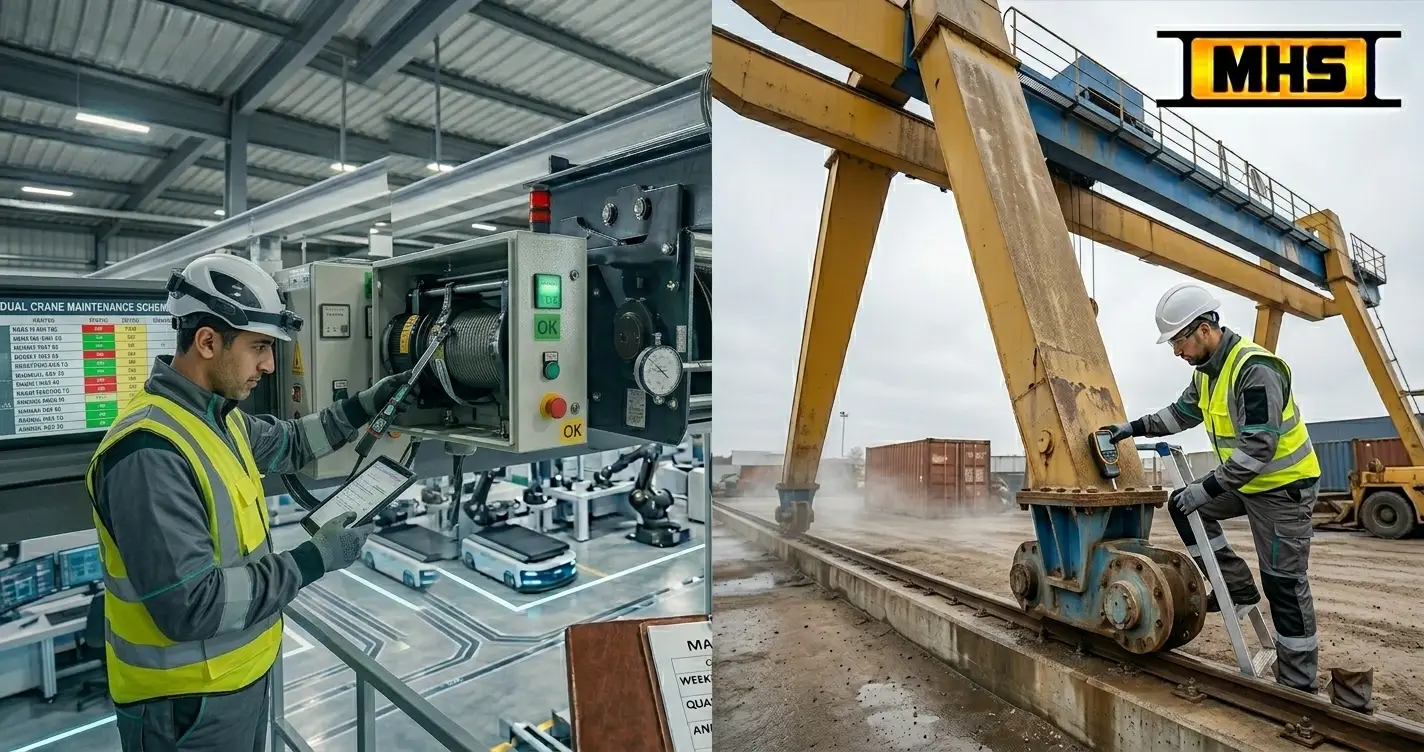
Both crane types share many inspection needs, but gantry crane maintenance has some unique challenges.
Overhead cranes run on fixed runway rails inside a building. That means they face less environmental exposure. Gantry cranes, especially outdoor models, deal with moisture and humidity, dust and debris exposure, and high-temperature environments, all of which accelerate wear and tear.
Structurally, gantry cranes rely on legs instead of a fixed runway, so leg joints and base connections need regular attention. Indoors or outdoors, the core checklist stays similar, but the inspection frequency and environmental checks differ.
Common Crane Maintenance Problems and Solutions
These are the most common issues in crane repair and maintenance — and how to handle them:
- Wire rope damage: Inspect daily. Replace immediately if strands are broken or kinked.
- Brake failure: Check brake pads monthly. Adjust or replace before wear becomes critical.
- Electrical failure: Test all wiring and connections regularly. Fix loose connections before they cause circuit faults.
- Crane misalignment: Check runway rails and wheels monthly. Misalignment causes uneven wear and crane breakdown.
- Gearbox issues: Change lubricant on schedule. Listen for grinding sounds during operation.
Common Crane Maintenance Mistakes to Avoid
Even experienced teams make these mistakes:
- Skipping routine crane maintenance because the crane “seems fine” — problems build quietly
- Ignoring small issues like minor noises or slight misalignment until they become major failures
- Poor lubrication practices — wrong lubricant type or missed components causes premature wear
- No documentation — without inspection records and maintenance logs, you cannot prove compliance or track recurring problems
OSHA Crane Maintenance Requirements
OSHA crane maintenance requirements fall under 29 CFR 1910.179 for overhead cranes and 29 CFR 1926.1412 for construction cranes. Key obligations include:
- Daily pre-operational inspections by the crane operator
- Periodic crane inspection by a qualified person
- Written records of all inspections and repairs
- Immediate removal from service for any safety-critical defect
Crane safety maintenance is not just good practice — it is federal law. Keep your compliance documentation current and accessible.
Professional Overhead Crane Service vs In-House Maintenance
Routine daily and monthly checks can be handled in-house with trained staff, but some tasks require professional overhead crane service.
Hire crane maintenance services when you need load testing, full electrical diagnostics, or structural assessments. Professionals have the tools and certifications to catch problems that in-house teams may miss. Improper in-house maintenance, especially on electrical systems or hoist components, can void warranties and create serious safety hazards.
What Happens If You Skip Crane Maintenance?
Equipment malfunction is the most immediate risk. A crane that has not been serviced can fail during a lift, causing serious injury or death. Beyond safety, you face compliance violations and potential OSHA fines. Long-term neglect also destroys your crane’s value. Repairs cost far more than prevention, and replacement costs even more.
Tips to Extend the Life of Your Crane
- Follow a documented crane maintenance program with set intervals
- Train operators on proper usage and load handling
- Never exceed rated load capacity
- Address overhead crane repair needs immediately — do not delay
- Keep up with overhead crane lubrication on all moving parts
- Maintain a clean working environment to reduce dust and debris exposure
- Track all service history and flag recurring issues early
Good overhead crane upkeep is the single best way to protect your investment and keep operations running smoothly. Material handling equipment maintenance done right means fewer surprises, lower costs, and a safer workplace.
Conclusion
Overhead crane maintenance is the foundation of a safe, efficient, and compliant facility. A consistent inspection routine, proper lubrication, and timely repairs protect your crew, reduce downtime, and extend your crane’s working life. Whether you manage daily checks in-house or rely on professional crane maintenance services, the key is consistency. Do not wait for something to break; schedule your next crane inspection today.
FAQs
How often should overhead cranes be inspected?
Overhead cranes should be inspected daily before each shift, monthly for mechanical and lubrication checks, and annually for a full structural and electrical inspection.
What is included in an overhead crane maintenance checklist?
A crane maintenance checklist covers hooks, wire ropes, brakes, controls, lubrication, electrical systems, structural components, and safety devices like limit switches and overload protection.
What is preventive maintenance for cranes?
Preventive maintenance for cranes is a scheduled servicing plan designed to catch and fix issues before they cause failure, reducing downtime and extending equipment lifespan.
What are OSHA requirements for crane maintenance?
OSHA requires daily operator inspections, periodic qualified-person inspections, immediate removal from service for defects, and complete documentation of all inspections and repairs.
What are common crane maintenance issues?
The most common issues include wire rope damage, brake failure, electrical faults, crane misalignment, gearbox wear, and corrosion, all preventable with routine crane maintenance.