When it comes to heavy load handling in industrial settings, choosing the right lifting equipment can make or break your workflow efficiency. The overhead crane vs gantry crane debate is one of the most common decisions facility managers face. Both are powerful pieces of material handling equipment, but they serve different purposes and work best in different environments.
This guide breaks down everything you need to know to make a smart, application-based selection.
What Is the Difference Between Overhead Crane and Gantry Crane?
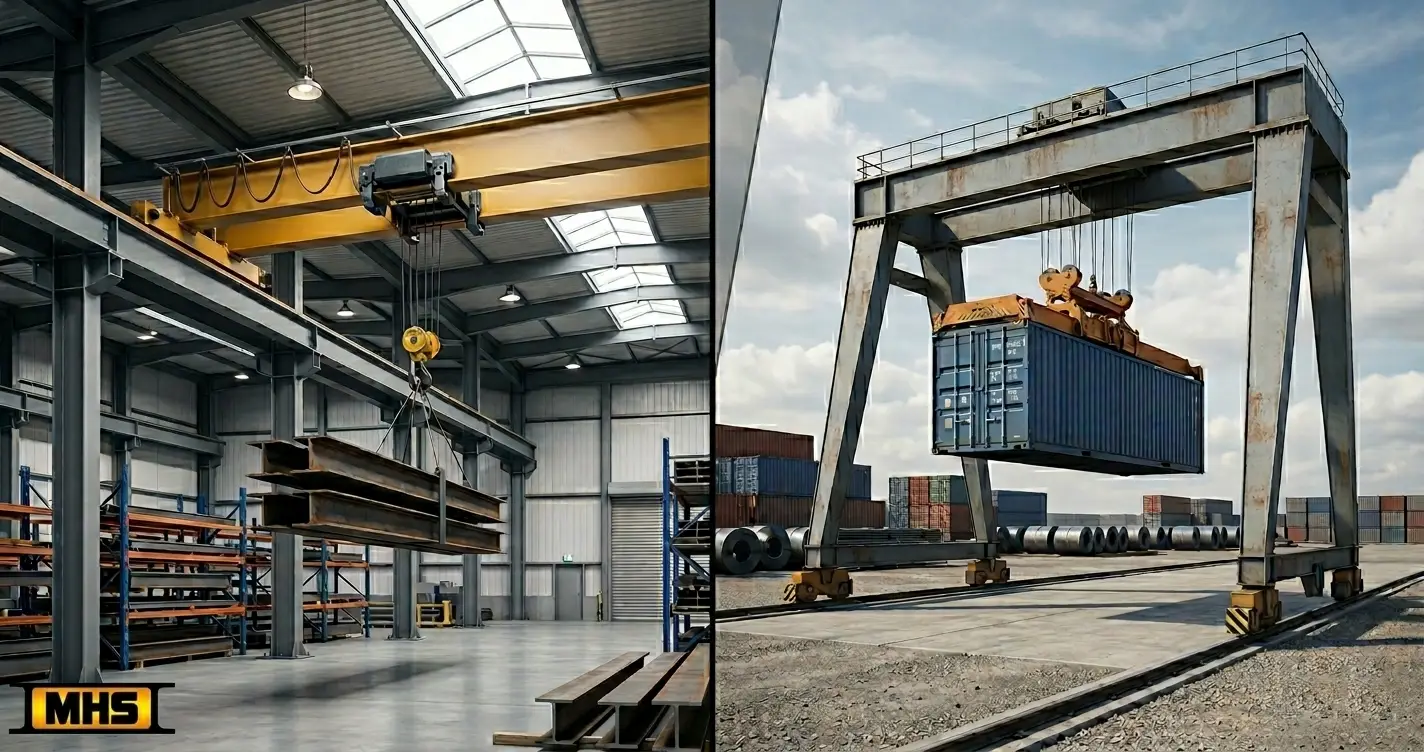
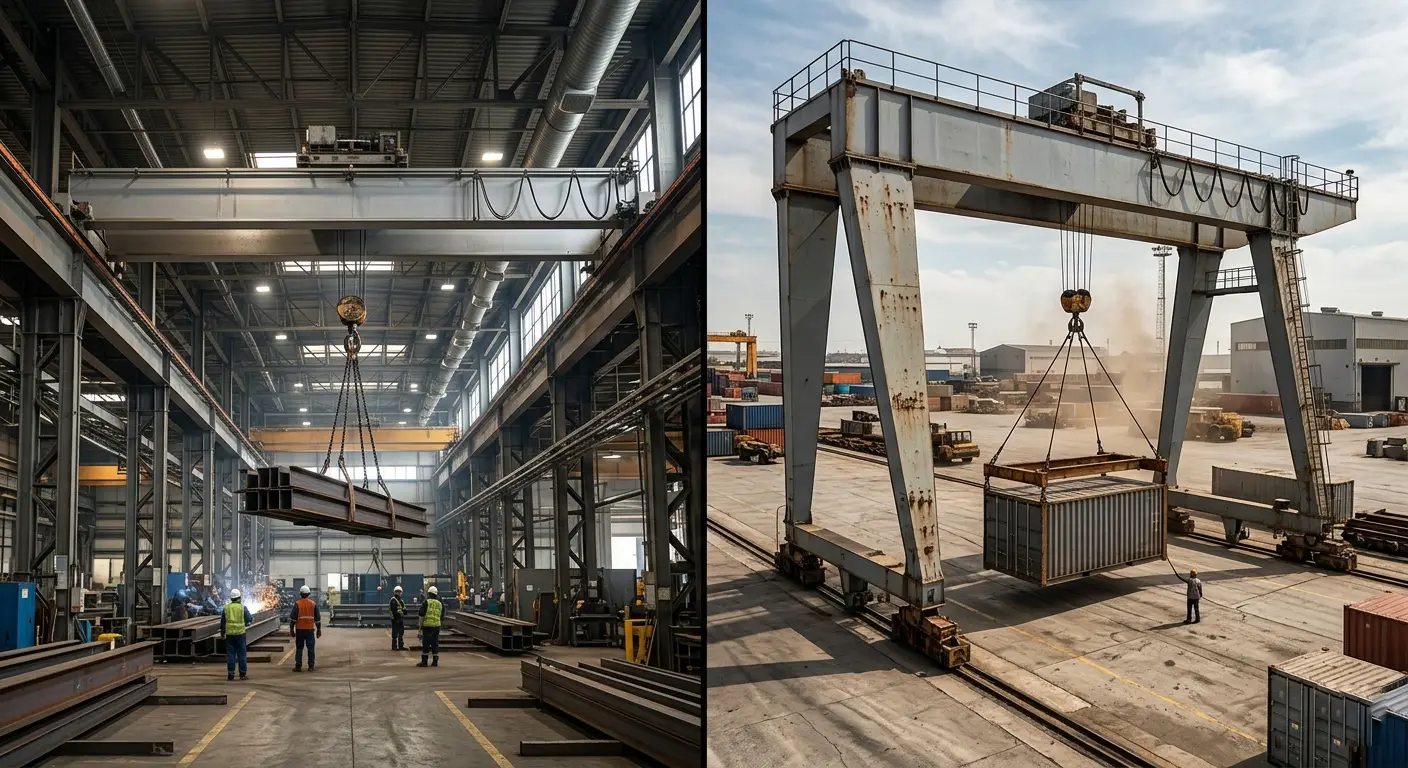
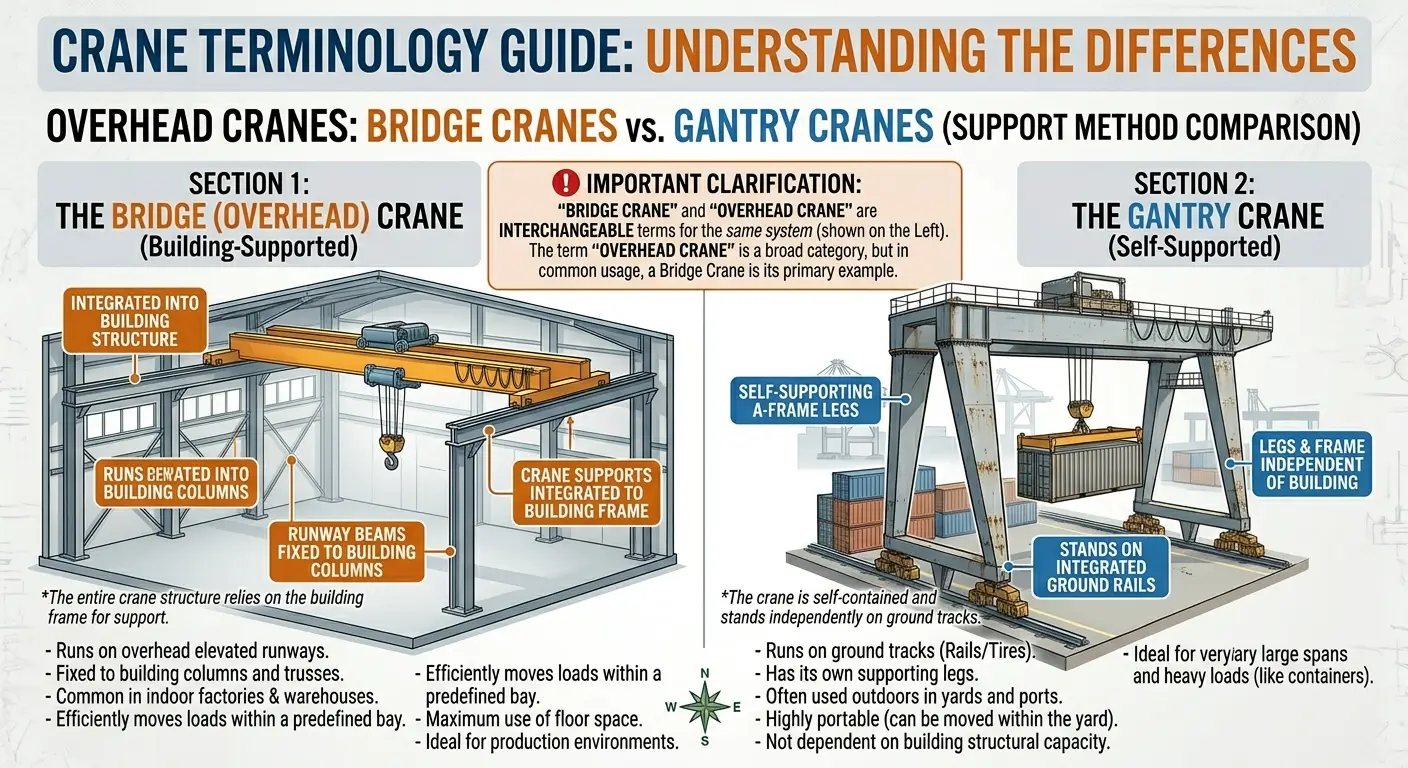
An overhead crane is mounted on elevated rails fixed to a building’s structure. A gantry crane stands on its own A-frame legs and runs on floor-mounted rails or wheels. The core difference is support: one relies on the building, the other is self-supported. Overhead cranes are best for permanent indoor installations, while gantry cranes offer more flexible lifting solutions.
What Is an Overhead Crane?
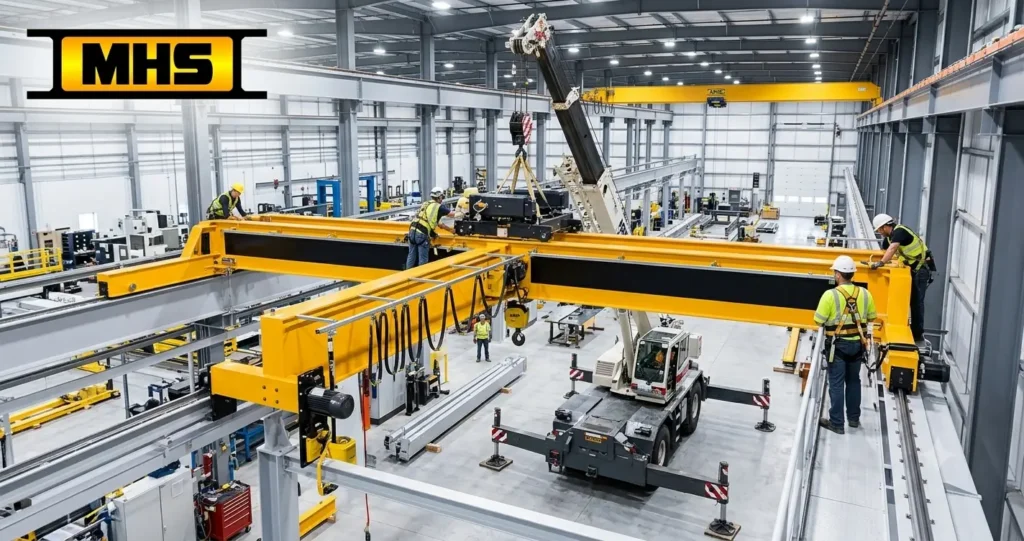
An overhead crane, also called an overhead bridge crane, is a lifting system that travels along runway beams attached to the walls or columns of a building. A hoist system and trolley system move along a horizontal beam called the crane girder, allowing load movement across the full floor area below.
Overhead cranes are widely used in manufacturing facilities, warehouses, and assembly lines where heavy-duty lifting occurs daily. They keep the floor clear and support continuous crane operation without interruption.
What Is a Gantry Crane?
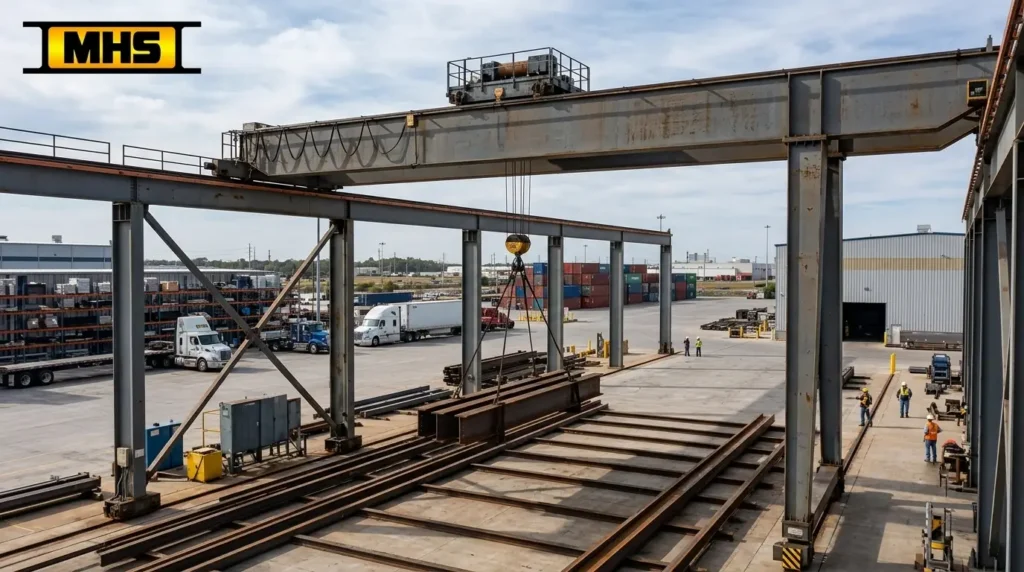
A gantry crane is a self-supported structure that uses A-frame legs to carry the crane girder above the ground. It runs on track-mounted or wheel-mounted systems, making it a highly mobile option for lifting operations in open spaces.
Gantry cranes are common in shipyards, construction sites, and outdoor storage areas. They do not require an existing building structure, which makes them ideal where permanent installation is not possible.
Overhead Crane vs Gantry Crane: Side-by-Side Comparison
| Feature | Overhead Crane | Gantry Crane |
| Structure | Building-supported crane | Self-supported structure |
| Installation | Permanent installation on runway beams | Portable or fixed floor setup |
| Mobility | Fixed to building | Wheel-mounted or track-mounted |
| Cost | Higher upfront cost | Lower initial cost |
| Capacity | Very high lifting capacity | Moderate to high capacity |
| Best Use Case | Indoor factory operations | Outdoor use and flexible sites |
When comparing overhead crane vs gantry crane cost, overhead systems typically cost more due to building modifications and permanent installation requirements. Gantry cranes offer a more cost-effective crane solution for temporary or outdoor setups.
Key Differences Explained
Structural Design
An overhead crane runs on elevated rails built into the facility. A gantry crane carries its own support through A-frame legs that sit on the ground. This means an overhead crane depends on the building’s load-bearing capacity, while a gantry crane is fully independent.
Installation Requirements
Overhead crane installation requires runway beams, column support, and sometimes structural reinforcement. It is a long-term commitment. Gantry crane setup time is much shorter. Many models allow quick assembly and disassembly, which is ideal for temporary job sites or changing operational needs.
Mobility and Flexibility
Gantry crane mobility vs overhead crane is a clear win for gantry systems. A portable crane or mobile gantry crane can be repositioned as needed. Overhead cranes are fixed to one building and cannot move between locations.
Capacity and Performance
When comparing overhead crane capacity vs gantry crane capacity, overhead systems generally support higher working load limits. They are built for continuous, heavy-duty lifting in demanding factory operations. Gantry cranes handle moderate to heavy loads well but may have limits in maximum load capacity depending on the model.
Uses and Applications of Overhead and Gantry Cranes
Both crane systems are essential in industrial crane systems across many sectors.
Overhead Crane Uses
- Manufacturing plants with continuous material transport needs
- Warehouses requiring full floor coverage
- Assembly lines where load stability and precision matter
- Steel mills and automotive facilities
Overhead crane applications are best where lifting operations happen in fixed, high-volume environments.
Gantry Crane Uses
- Shipping yards and container terminals
- Construction sites with open or outdoor workspaces
- Outdoor storage areas handling large materials
- Maintenance facilities needing a portable crane
Gantry crane applications shine in settings where installation requirements must stay minimal or flexible.
Advantages and Disadvantages
Overhead Crane Advantages
- High lifting capacity for heavy-duty lifting
- Full coverage of the work area below
- Leaves the floor completely clear
- Reliable for long-term, high-frequency crane operation
- Integrated cleanly into building-supported crane systems
Overhead Crane Disadvantages
- Requires significant structural support
- High installation cost and longer setup time
- Not movable once installed
- Building must meet load-bearing requirements
Gantry Crane Advantages
- Self-supported structure with no building dependency
- Portable and easy to reposition
- Lower upfront operational cost
- Works well for both indoor use and outdoor use
- Faster assembly and disassembly
Gantry Crane Disadvantages
- Generally lower maximum load capacity than overhead systems
- Takes up floor space due to legs and rails
- Less suitable for non-stop, high-volume lifting
- Outdoor exposure can cause wear over time
Types of Overhead and Gantry Cranes
Types of Overhead Cranes
- Bridge crane: The most common type, with a crane girder spanning two runway beams for wide-area coverage
- Monorail crane: A single-track system for straight-line material transport
- Double girder crane: Built for heavier loads and higher lifts
These material handling crane types are the backbone of most manufacturing facilities.
Types of Gantry Cranes
- Full gantry crane: Both legs ride on floor-mounted rails for maximum stability
- Semi-gantry crane: One leg on the floor, the other on a wall-mounted rail
- Portable gantry crane: Wheel-mounted crane that moves freely around a workspace
Understanding these heavy lifting crane types helps match the right system to your industrial crane types comparison needs.
Use Case Scenarios
Best Crane for Indoor Facilities
For indoor factory operations and warehouses, an overhead crane system wins. It maximizes floor space, handles high lifting capacity demands, and supports non-stop productivity improvement. If your building can support the load, it is the smarter long-term investment.
Best Crane for Outdoor Projects
For construction sites, shipyards, and open yards, a gantry crane system is the better fit. It needs no building structure, sets up fast, and can move with your project.
Warehouse Crane vs Yard Crane
A warehouse crane (overhead) is designed for enclosed, structured environments. A yard crane (gantry) handles open-air material transport and heavy-duty outdoor lifting. The environment defines the right choice.
Portable vs Fixed Requirements
If you need a portable gantry crane vs overhead crane comparison, the answer is simple. For mobility, go gantry. For fixed, high-capacity operations, go overhead. A fixed gantry crane vs overhead crane decision depends on whether your site is permanent or temporary.
Common Mistakes When Choosing a Crane
- Choosing based only on cost: Low upfront cost can mean higher long-term operational cost
- Ignoring mobility needs: A fixed crane in the wrong location reduces workflow efficiency
- Not considering space limitations: Gantry legs and rails take up floor space
- Overlooking load capacity requirements: Undersized cranes create safety risks
Gantry Crane vs Bridge Crane vs Overhead Crane
These terms cause frequent confusion. A bridge crane and an overhead crane refer to the same system. The terms are interchangeable. A gantry crane vs bridge crane comparison is simply a question of support: does the crane rely on the building or stand on its own? An overhead bridge crane vs gantry crane is the same distinction. Bridge cranes are building-supported; gantry cranes are self-supported.
Which Is Better: Overhead Crane or Gantry Crane?
There is no single best crane for industrial use. It depends on four factors:
- Space: Overhead cranes need structural support; gantry cranes need floor space
- Budget: Gantry cranes cost less to install initially
- Mobility: Gantry cranes win for flexible lifting solutions
- Load: Overhead cranes handle higher working load limits
If you work in a permanent indoor facility with high lifting demands, the overhead crane is better. If you need a flexible, portable, or outdoor solution, the gantry crane is the right pick.
How to Choose the Right Crane: Quick Decision Guide
Use this crane selection guide before making any decision:
- Available space: Indoor with strong structure → overhead; open or limited structure → gantry
- Indoor vs outdoor use: Indoor = overhead; outdoor = gantry
- Load capacity: Very heavy and frequent → overhead; moderate or variable → gantry
- Frequency of use: Daily high-volume lifting → overhead; periodic or mobile needs → gantry
- Installation requirements: Permanent facility → overhead; temporary or flexible site → gantry
This is your starting point for how to choose the right crane for any facility.
Quick Decision Table
| If You Need… | Choose… |
| Indoor lifting in a fixed facility | Overhead crane |
| Mobility and flexibility | Gantry crane |
| High lifting capacity | Overhead crane |
| Minimal installation requirements | Gantry crane |
| Outdoor or construction use | Gantry crane |
| Full floor coverage indoors | Overhead crane |
Crane types for warehouse settings almost always point to overhead systems, while yard and site work favors gantry cranes.
Conclusion
Both overhead and gantry cranes are proven, reliable industrial crane systems. The right choice comes down to your space, load, budget, and how often you need to move the crane. Overhead cranes are the go-to for permanent, high-capacity indoor operations. Gantry cranes deliver flexibility, portability, and lower setup costs for outdoor or temporary needs.
Still unsure which system fits your operation? Consult a crane specialist to review your site requirements before investing.
FAQs
What is the main difference between overhead crane and gantry crane?
An overhead crane is mounted on a building’s structure using elevated rails. A gantry crane is self-supported with A-frame legs. The key difference is whether the crane depends on the building or stands independently.
Which crane is more cost-effective?
Gantry cranes have lower installation costs, making them more budget-friendly upfront. Overhead cranes may offer better value long-term in high-volume, permanent facilities.
Where are gantry cranes commonly used?
Gantry cranes are used in shipyards, construction sites, outdoor storage areas, and maintenance yards where flexible or portable lifting is needed.
Can gantry cranes be used indoors?
Yes. Portable and semi-gantry cranes work well indoors, especially in spaces that lack the structural support required for an overhead crane system.
What type of crane is best for warehouses?
An overhead crane is typically best for warehouses due to its high capacity, full floor coverage, and ability to handle continuous lifting operations without taking up floor space.