
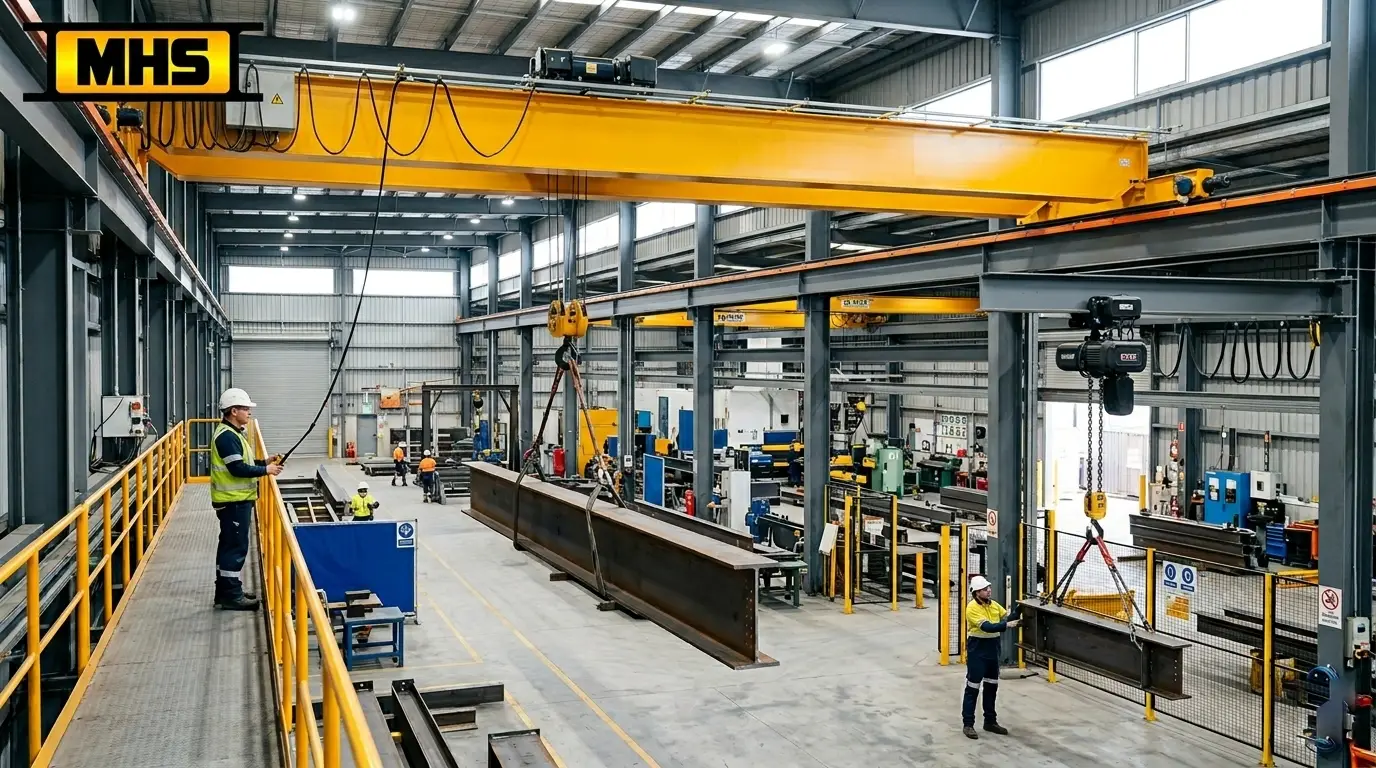
When shopping for industrial lifting equipment, many people confuse hoists and cranes. Both lift heavy loads, but they work very differently. Understanding the hoist vs crane difference helps you pick the right tool, avoid costly mistakes, and keep your workplace safe. Whether you manage a warehouse, workshop, or manufacturing facility, this guide breaks it all down clearly.
What is the difference between a hoist and a crane?
A hoist lifts materials vertically, while a crane lifts and moves materials both vertically and horizontally. A hoist is often part of a crane system, but cranes provide greater movement and flexibility for industrial lifting equipment and material handling.
What Is a Hoist?
A hoist is a lifting device designed to raise and lower loads. It is compact, focused, and built for one primary job: vertical movement.
How a Hoist Works
A hoist uses a chain, wire rope, or similar mechanism to lift a load straight up and lower it back down. It is ideal for lifting heavy equipment safely in a fixed spot. Most hoists mount to a fixed point overhead or travel along a short track.
Common Types of Hoists
- Chain hoist – Manual or powered, uses a linked chain to lift loads
- Electric hoist – Motor-driven for faster, easier lifting
- Wire rope hoist – Uses steel cable, suited for heavier or high-cycle lifting
- Manual hoist – Hand-operated, simple and low-cost
Where Hoists Are Commonly Used
Hoists work well in workshops, warehouses, maintenance areas, and manufacturing facilities. Any space that needs a hoist overhead for quick vertical lifts is a good candidate. They are common in engine bays, loading docks, and assembly lines.
What Is a Crane?
A crane is a full lifting system capable of both vertical and horizontal movement. It can move a load across a room, not just up and down.
How a Crane Works
A crane lifts a load and then travels horizontally along a runway rail or boom. This allows for precise load positioning and material movement across a workspace. Cranes handle larger load handling tasks that a hoist alone cannot manage.
Types of Cranes Used in Industry
- Overhead crane – Runs along rails mounted near the ceiling
- Gantry crane – Freestanding structure that straddles a work area
- Jib crane – Wall or floor-mounted with a rotating arm
- Bridge crane – A type of overhead crane with a bridge girder spanning two runways
Common Crane Applications
Cranes are standard in steel fabrication, heavy manufacturing, warehouses, and large material handling operations. They are built to move heavy loads repeatedly across wide spans.
Hoist vs Crane: Key Differences Explained
Here is a direct look at the hoist and crane difference across the most important factors.
| Feature | Hoist | Crane |
| Movement | Vertical only | Vertical + horizontal |
| Best Use | Smaller lifting jobs | Large industrial operations |
| Cost | Lower | Higher |
| Flexibility | Limited | More versatile |
| Installation | Easier | More complex |
Movement Capabilities
A hoist only moves loads up and down. A crane moves loads vertically and horizontally, sometimes in multiple directions. If you need to carry a load from one end of a floor to another, you need a crane.
Lifting Capacity
Both hoists and cranes cover a wide range of load capacity. Light-duty hoists may handle a few hundred pounds. Heavy industrial cranes can lift hundreds of tons. The right choice depends on your average lifting load and peak demands.
Installation and Space Requirements
A hoist installs quickly and needs minimal headroom. A low headroom hoist is available for tight spaces. A crane system requires runway rails, end trucks, a bridge girder, and sometimes structural reinforcements. Always assess your available space before choosing.
Cost and Long-Term Value
Hoists cost less upfront and are cheaper to maintain. Cranes cost more but deliver more value for high-volume or heavy-duty lifting needs. Think about frequency of use and total cost over time, not just the purchase price.
Overhead Crane vs Hoist: What’s the Difference?
This is one of the most common points of confusion in industrial lifting.
Is an Overhead Crane the Same as a Hoist?
No. An overhead crane is a complete lifting system. A hoist is one component within that system. The overhead crane vs hoist question often comes up because they are so closely linked.
How an Overhead Crane Hoist System Works
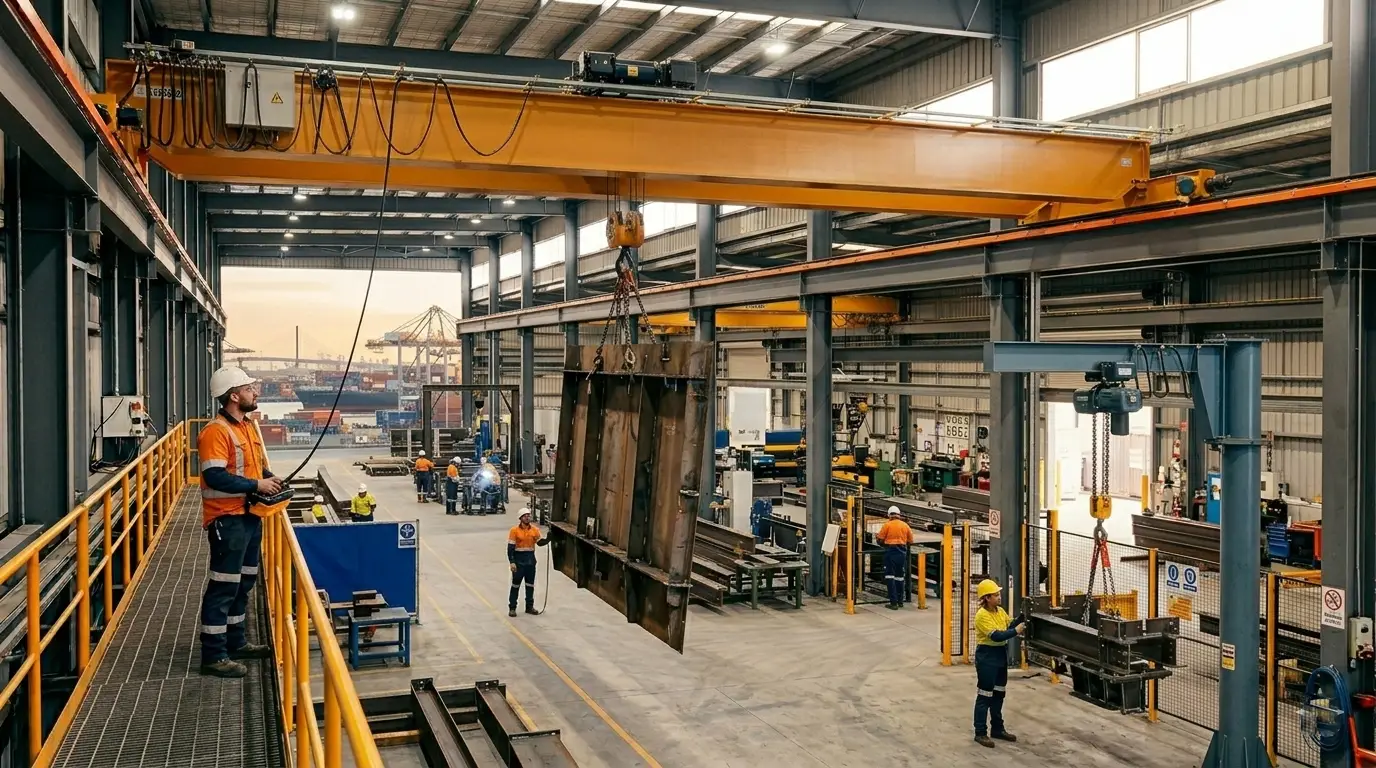
In a typical overhead crane with hoist setup, the hoist handles the lifting and lowering of the load. The crane’s trolley carries the hoist across the bridge girder. The bridge then travels along the runway. Operators control everything through a pendant control or radio controls. So when someone says “overhead crane hoist,” they mean the hoist is installed as part of the crane, not that the two are the same thing.
When Should You Use a Hoist vs Crane?
Best Situations for Using a Hoist
- You only need vertical lifting
- Your workspace is small or has limited ceiling height
- You want a budget-friendly lifting solution
- Lifting frequency is low to moderate
Best Situations for Using a Crane
- You move heavy loads across long distances
- Your operation involves repetitive industrial lifting
- You need precise load positioning in multiple directions
- Your facility handles large-scale material movement
Hoist vs Crane for Warehouse Operations
For warehouse lifting systems, the right choice depends on layout and volume. A hoist works well for spot lifting at a fixed station. A crane improves warehouse productivity when loads travel across the floor regularly. Safety and space considerations also matter. A crane offers more control for complex load transport, while a hoist keeps things simple when multidirectional movement is not needed. When comparing a chain hoist vs crane for warehouse use, a chain hoist suits lighter, localized tasks, while a crane handles broader operations.
Is a Hoist the Same as a Crane?
No, a hoist is not the same as a crane. A hoist only lifts materials vertically. A crane can lift, move, and position materials in multiple directions. In many systems, the hoist is one component of the crane. Asking “is a hoist the same as a crane” is like asking if a motor is the same as a car — the motor powers the car, but it is not the whole machine.
How to Choose the Right Lifting Equipment
Choosing between a crane and hoist comes down to your specific lifting requirements. Ask yourself these questions:
- Load weight – How heavy are your typical loads?
- Facility size – How much floor space and headroom do you have?
- Frequency of lifting – How often will the equipment run each day?
- Safety requirements – What standards apply to your industry?
- Budget – What can you invest upfront and over time?
- Material handling goals – Do you need to move loads across a wide area, or just up and down?
For light, fixed-point lifting in a workshop or maintenance area, a hoist is usually enough. For a production environment, heavy manufacturing, or full crane for material handling across your facility, invest in a proper crane system. Choosing the right lifting equipment the first time saves money and prevents downtime.
Final Thoughts
The core difference between a hoist and a crane comes down to movement. A hoist moves loads up and down. A crane moves them in multiple directions. Both are essential types of hoisting equipment, but they serve different purposes.
Before you invest, review your load capacity needs, facility layout, and lifting frequency. If your operation is growing, a full crane system offers more long-term flexibility. If you need simple, cost-effective vertical lifting, a quality hoist does the job well.
Understanding the hoist vs crane decision fully before purchasing means fewer regrets and a safer, more productive workplace.
Frequently Asked Questions
What is the difference between a hoist and a crane?
A hoist lifts loads vertically. A crane lifts and moves loads both vertically and horizontally. A hoist is often built into a crane system as one of its core components.
Can a hoist replace a crane?
Not always. If you only need vertical lifting in a fixed spot, a hoist may be enough. But if you need to move loads across a space, a crane is necessary.
Is an overhead crane just a hoist?
No. An overhead crane is a complete system that includes a hoist, trolley, bridge girder, runway, and controls. The hoist is one part of the larger crane setup.
Which is better for warehouses: a hoist or crane?
It depends on your operation. For fixed-point lifting, a hoist works well. For moving loads across the warehouse floor, a crane is the better choice.
What type of lifting equipment is best for heavy loads?
For very heavy loads in an industrial facility, an overhead crane or bridge crane with a high-capacity hoist is usually the best solution.