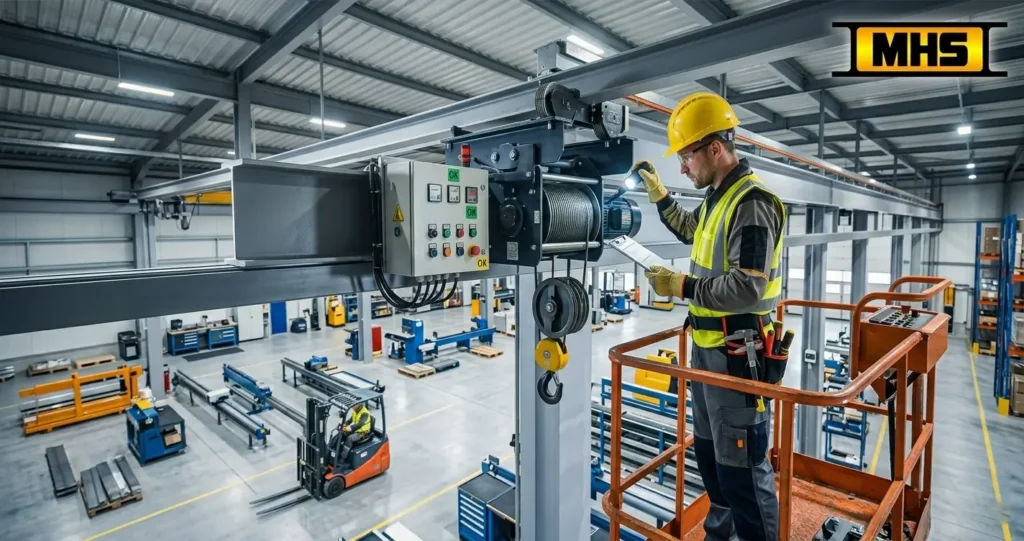
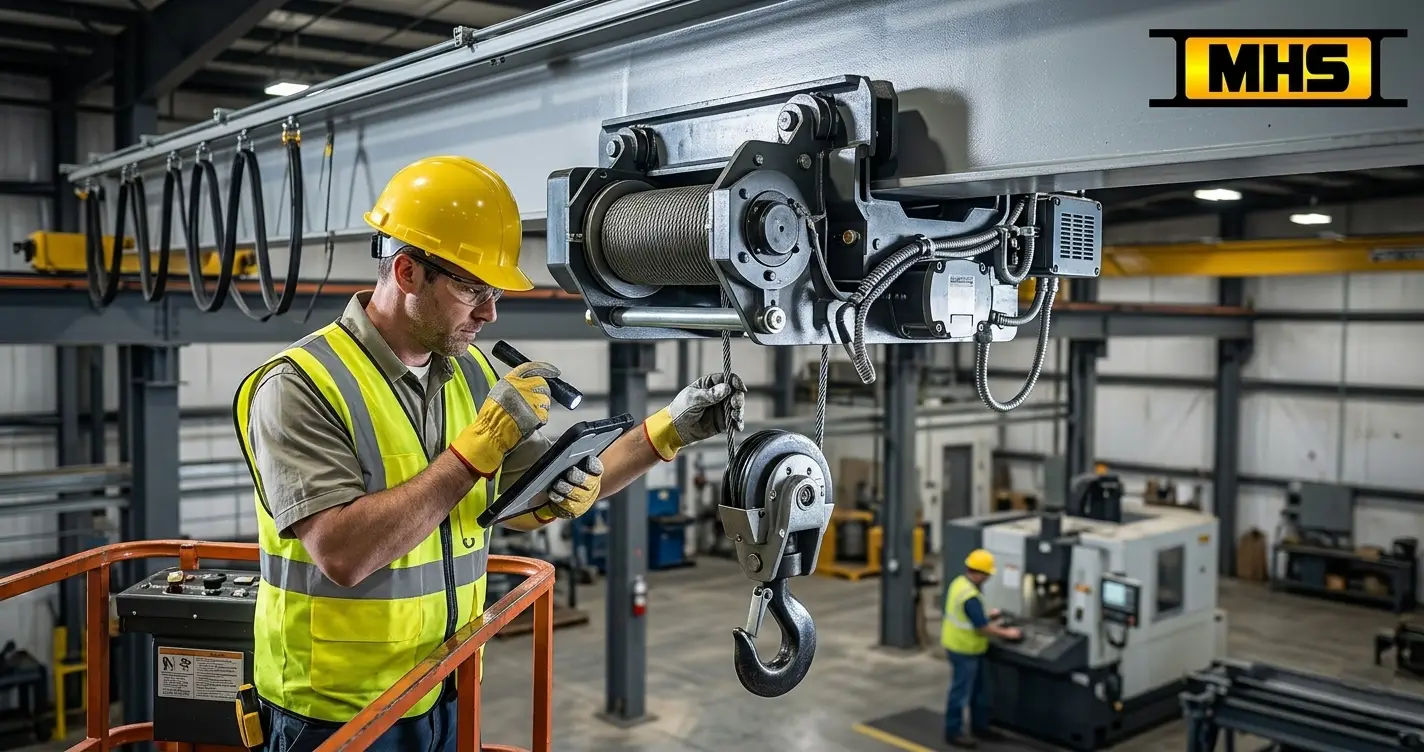
Overhead cranes must be inspected regularly to ensure safe operation and prevent equipment failure. OSHA requires daily, frequent, and annual inspections depending on crane usage. Critical components like hoists, hooks, brakes, and control systems must be checked before use and by qualified personnel at scheduled intervals.
What Is Overhead Crane Inspection?
An overhead crane inspection is a structured process of examining a crane’s mechanical, electrical, and structural components to confirm that they are safe and functional. It covers everything from the hoist and hooks to the runway beams and control systems.
Crane inspection fundamentals exist for one clear reason: cranes carry heavy loads over people and equipment. A single failed component can cause a catastrophic accident. Regular inspections catch problems before they become dangerous.
This applies to all crane types. Bridge cranes, gantry crane inspection programs, and overhead travelling cranes all require the same disciplined approach. Hoist inspection is a key part of this process, as the hoist is the most mechanically active component in any lifting system.
Without routine crane inspections, facilities risk equipment failure, worker injury, regulatory penalties, and costly downtime.
Why Crane and Hoist Inspections Are Important
Skipping inspections might seem like a time saver, but the risks far outweigh the convenience. Here is why regular crane and hoist inspections matter:
Prevent equipment failure and accidents – Worn parts, loose connections, and developing cracks can be identified and fixed before they cause a collapse or drop.
Extend equipment lifespan – Catching small issues early prevents them from turning into major mechanical failures that shorten a crane’s service life.
Ensure OSHA compliance – Failing to meet inspection requirements exposes a business to heavy fines and potential shutdown orders.
Reduce downtime – A crane that breaks during operation halts the entire work area. Preventive inspections keep equipment running on schedule.
Protect operators and facility workers – Every person working near a crane depends on that equipment being properly maintained and inspected.
Many facility managers ask, “Why do I need my hoist inspected separately?” The answer is simple. The hoist handles the actual load. It operates under the most stress of any crane component and needs its own dedicated inspection process. Hoist service and hoist inspections are not optional extras ; they are core safety requirements.
OSHA Crane Inspection Requirements
What OSHA Requires for Crane Inspections
OSHA crane regulations are outlined primarily under 29 CFR 1910.179, which covers overhead and gantry cranes in general industry settings. This standard sets clear rules about inspection frequency, qualified personnel, and documentation.
OSHA requires that cranes be inspected at multiple intervals: before each shift, at regular intervals based on use, and at least once per year for a full structural and mechanical review. These are not suggestions. They are legal obligations that every employer must meet.
OSHA hoist inspection requirements fall under the same standard. Hoists must be checked as part of the crane system, with particular attention to brakes, limit switches, wire ropes, and load chains.
Failure to comply with OSHA compliance for cranes can result in citations, financial penalties, and, in serious cases, criminal liability if a preventable accident occurs.
OSHA Daily Crane Inspection Requirements
Before any crane is put into service for the day, a pre-shift inspection must take place. OSHA daily crane inspection requirements place this responsibility on the operator or a designated qualified person.
The daily crane inspection checklist typically covers:
- Controls — All operating controls must respond correctly and return to the neutral position when released
- Hooks — Check for cracks, deformation, or damage to the safety latch
- Brakes — Confirm brakes hold properly and do not slip under load
- Limit switches — Test upper and lower limit switches to ensure they stop travel at the correct points
- Wire rope or chain — Look for kinks, broken wires, corrosion, or unusual wear
- Hoist movement — Verify smooth operation with no unusual noise or hesitation
If any defect is found, the crane must be taken out of service until the issue is corrected. Operating a crane with a known defect is a direct OSHA violation.
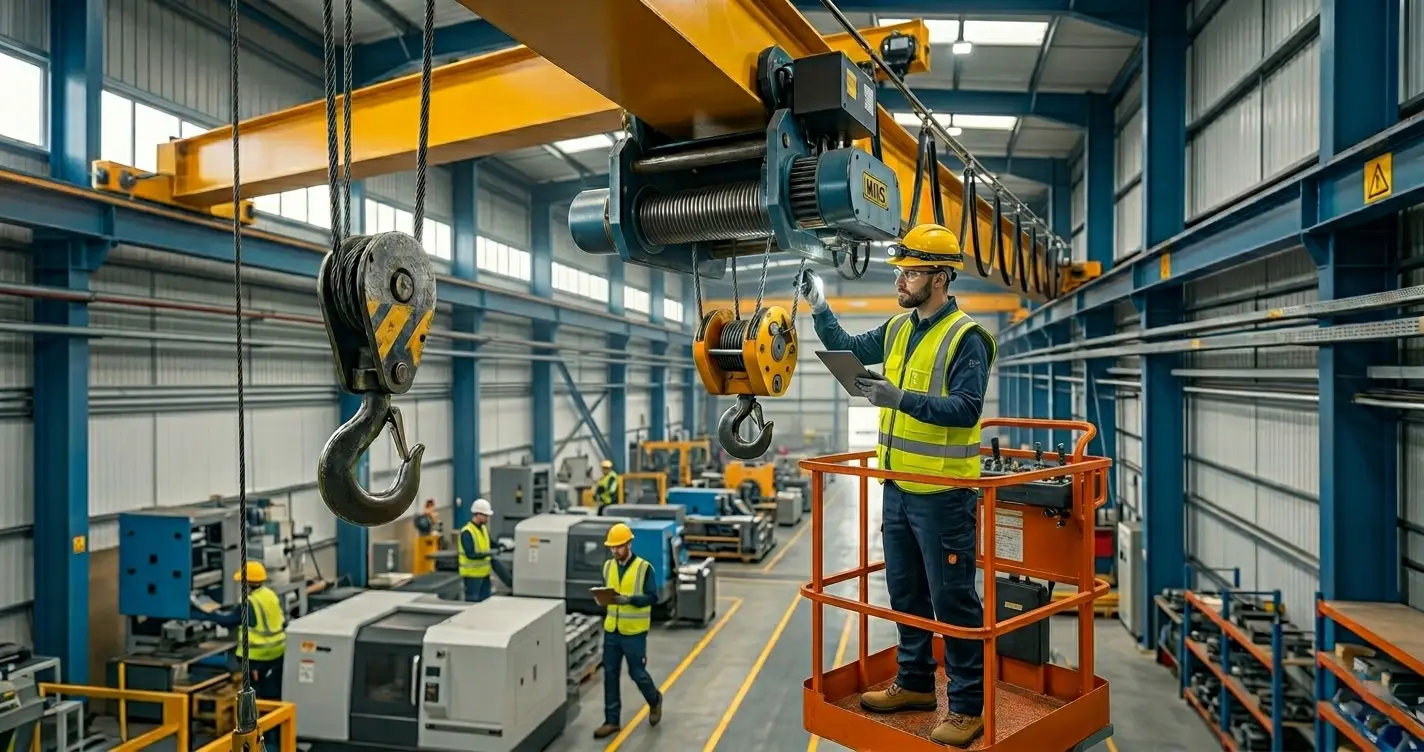
Crane Inspection Frequency (How Often Should Cranes Be Inspected?)
Daily Inspections
Daily inspections happen before each shift or before the crane is used for the first time that day. These are visual and operational checks focused on catching obvious defects and confirming that safety controls are working. The operator is typically responsible for completing and recording these checks.
Frequent Inspections
Frequent inspections go deeper than the daily check. They are scheduled based on usage intensity rather than a fixed calendar date. Under OSHA standards, crane inspections must be done at least monthly for cranes in heavy use and at intervals no greater than every three months for cranes in regular use.
These inspections cover detailed component checks, including brake wear, hook deformation, wire rope condition, and electrical system function. A qualified maintenance technician should perform frequent inspections, not just the operator.
Annual Crane Inspection Requirements
Annual crane inspection requirements call for a complete structural and mechanical review of the entire crane system. This includes the runway beams, end trucks, bridge structure, hoist, electrical systems, and all load-bearing components.
Annual inspections must be performed by a qualified inspector and fully documented. The records must be kept on file and made available to OSHA if requested. This inspection is the most thorough review in the crane inspection cycle and is required for continued compliance and certification.
What Are the Two Parts of a Frequent Crane Inspection?
A frequent crane inspection has two distinct parts:
Visual Inspection
This involves a careful physical examination of all accessible crane components. The inspector looks for signs of wear and tear, corrosion, cracking, deformation, and any damage that could affect safe operation. Wire ropes, hooks, brakes, structural members, and electrical connections all fall under this review.
Operational Testing
This part tests the crane under actual working conditions. The inspector operates the crane both with and without a load to check brake response, hoist movement, limit switch function, control accuracy, and overall mechanical performance.
Both parts are necessary. A visual check alone can miss functional problems. Operational testing alone can miss developing structural damage. Together, they give a complete picture of the crane’s condition.
Daily Crane Inspection Checklist (Simple Breakdown)
Use this checklist before every shift. If any item fails, remove the crane from service immediately.
| Component | What to Check |
| Hook | Cracks, deformation, damaged safety latch |
| Wire Rope or Chain | Broken wires, kinks, corrosion, unusual wear |
| Brakes | Holding power, no slipping under load |
| Controls | Correct response, neutral return |
| Limit Switches | Upper and lower travel stops functioning |
| Hoist | Smooth movement, no unusual noise |
| Runway and Bridge | No visible damage or obstructions |
| Warning Devices | Horn or alarm working correctly |
This daily crane inspection checklist aligns with crane inspection fundamentals outlined in OSHA 1910.179 and should be documented every time it is completed.
Hoist Inspection and Testing
What Is Hoist Inspection?
The hoist is the mechanical unit that raises and lowers the load. It is the most heavily stressed part of any overhead crane system and the most likely component to show wear under regular use.
Hoist inspection is a focused review of the hoist’s mechanical and electrical condition. It checks for brake wear, rope or chain condition, hook deformation, motor function, and limit switch accuracy. Because the hoist is in constant motion during crane operation, it accumulates wear faster than the structural crane components.
Neglecting hoist inspection is one of the most common causes of preventable crane accidents in industrial settings.
Hoist Testing Procedures
Hoist testing goes beyond visual checks. It includes:
Load testing — The hoist is tested at or near its rated capacity to confirm it can safely handle the required loads without brake slip, structural deflection, or control failure.
Operational testing — The hoist is run through full lifting and lowering cycles to check for smooth movement, correct brake engagement, and accurate limit switch response.
Hoist service checks — Lubrication levels, brake lining thickness, and rope or chain condition are all verified and serviced as needed.
Hoist inspections should be performed by a qualified technician who understands the specific hoist model and its service requirements. Operator-level checks are not a substitute for proper hoist service intervals.
Gantry Crane Inspection Requirements
Gantry cranes share most inspection requirements with bridge cranes, but their freestanding structure creates a few additional check points.
A thorough gantry crane inspection includes:
Structural frame — Inspect all legs, cross members, and joints for cracks, corrosion, or deformation. Gantry legs carry the full weight of the crane and load, so structural integrity is critical.
Wheels and rails — Check the travel wheels for wear and flat spots. Inspect the floor rails for alignment, damage, and secure anchoring.
Load movement testing — Confirm that the crane travels smoothly along its full runway without binding, jerking, or unusual vibration.
Hoist and bridge components — All standard hoist, hook, brake, and control inspections apply equally to gantry cranes.
Outdoor gantry cranes require additional attention to corrosion, weather-related wear, and rail conditions that indoor cranes typically do not face.
Who Should Inspect a Crane?
Not everyone is qualified to inspect a crane. OSHA makes a clear distinction between operators, competent persons, and qualified inspectors.
Crane operators can perform daily pre-shift visual checks and basic operational tests. They are the first line of defense against obvious defects.
Competent persons — as defined by OSHA — have the knowledge, training, and authority to identify hazards and take corrective action. Frequent inspections must be conducted by a competent person.
Qualified crane inspectors hold formal training, certification, or professional credentials in crane inspection. Annual inspections and post-repair inspections should always be performed by a qualified inspector.
Third-party crane inspection services are commonly used for annual reviews. They provide an independent, documented assessment that carries regulatory weight.
The question of who should inspect a crane has a straightforward answer: the more critical the inspection, the more qualified the person performing it must be. Relying solely on operators for all inspection levels is not compliant with OSHA standards and puts workers at risk.
Common Crane Inspection Failures and Warning Signs
Knowing what to look for makes every inspection more effective. These are the most common failures found during crane and hoist inspections:
Worn wire ropes or chains — Broken wires, kinks, or severe corrosion are immediate removal-from-service conditions.
Brake failure or slipping — A brake that does not hold load is one of the most dangerous defects a crane can have.
Electrical issues — Frayed wiring, loose connections, or erratic control response all indicate electrical system problems that require immediate attention.
Hook deformation — A hook that has opened beyond its original gap dimension or shows visible cracks must be replaced before the crane operates again.
Overheating hoists — Unusual heat from the hoist motor or brake assembly signals overloading, mechanical friction, or electrical faults.
Any of these warning signs should result in the crane being taken out of service until repairs are completed and verified.
Benefits of Regular Crane and Hoist Inspections
Consistent inspection programs deliver clear, measurable benefits to any facility:
Improved workplace safety — Regular checks mean defects are caught early, before they can cause injury or worse.
Reduced downtime — Planned maintenance during inspections prevents unexpected breakdowns that halt entire operations.
Lower repair costs — Fixing a small issue during a routine inspection is far less expensive than repairing major damage after a failure.
OSHA compliance — Documented inspection records demonstrate that a facility meets federal crane inspection requirements, protecting the business from citations and penalties.
Longer equipment lifespan — Cranes that are properly maintained last significantly longer than those that are neglected, delivering better return on investment.
Conclusion
Routine overhead crane inspection is not just a regulatory checkbox. It is a fundamental part of running a safe and efficient industrial operation. Every inspection, from the daily pre-shift walk-around to the full annual review, serves a specific purpose in catching problems before they become serious.
OSHA compliance is mandatory, not optional. Crane inspection frequency requirements exist because the consequences of a crane failure are severe for workers, equipment, and the business as a whole.
Regular hoist inspection and crane inspections reduce accidents, extend equipment life, and keep operations running without costly interruptions. Facilities that treat inspections as a priority consistently outperform those that treat them as a burden.
If your facility does not yet have a documented inspection program in place, now is the right time to establish one. Work with a qualified inspector, follow OSHA crane regulations, and make sure every crane and hoist in your facility is checked, tested, and certified on schedule. MHS Crane provides crane inspection and safety services for industrial facilities in Pompano Beach and throughout South Florida.
Frequently Asked Questions
How often should overhead cranes be inspected?
Overhead cranes require daily pre-shift checks, frequent inspections based on usage intensity (at least monthly for heavy use), and a full annual inspection. OSHA 1910.179 sets the minimum standards for each inspection level.
What is included in a crane inspection?
A crane inspection covers hooks, wire ropes or chains, brakes, limit switches, controls, structural members, runway systems, electrical components, and hoist function. The scope varies depending on whether it is a daily, frequent, or annual inspection.
What does OSHA require for crane inspections?
OSHA requires that cranes be inspected before each use, at regular intervals based on service frequency, and annually by a qualified inspector. All inspections must be documented and records must be retained.
Who is qualified to inspect a crane?
Daily checks can be performed by trained operators. Frequent inspections require a competent person. Annual and post-repair inspections must be conducted by a qualified crane inspector or certified third-party professional.
What is checked in a hoist inspection?
A hoist inspection covers brake condition and function, wire rope or load chain wear, hook deformation, motor performance, limit switch accuracy, and overall operational smoothness under load.
What happens if a crane fails inspection?
A crane that fails inspection must be removed from service immediately. It cannot be returned to operation until all defects are repaired and the crane passes a follow-up inspection. Continuing to operate a failed crane is an OSHA violation.