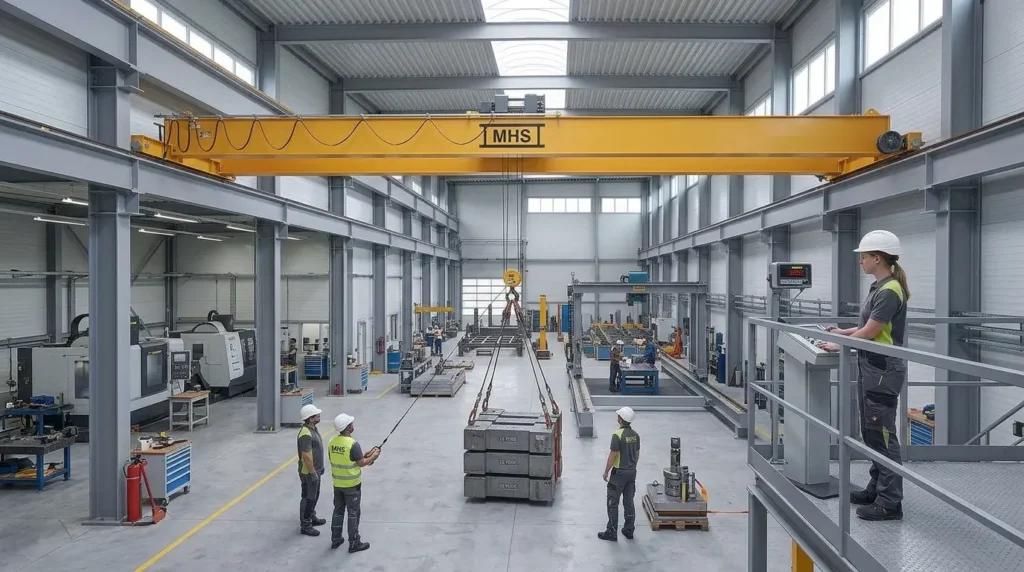
Crane load testing is a controlled test that verifies a crane can lift, hold, and move a known test load safely. For overhead and gantry cranes, OSHA 29 CFR 1910.179 requires new and altered...
A crane runway system is the supporting structure and travel path that allows an overhead bridge crane to move along the length of a facility. It includes runway beams, rails, rail clips, bumpers, and...
The main difference between top running and under running cranes is how the bridge travels relative to the runway beams. A top running crane operates on top of the runway rails, while an under...
Overhead crane components fall into four categories: structural (bridge, girders, runway), mechanical (trolley, hoist, hook, wheels), electrical (motors, controls, wiring), and safety (limit switches, brakes, safety devices). Understanding each part matters because a crane’s...
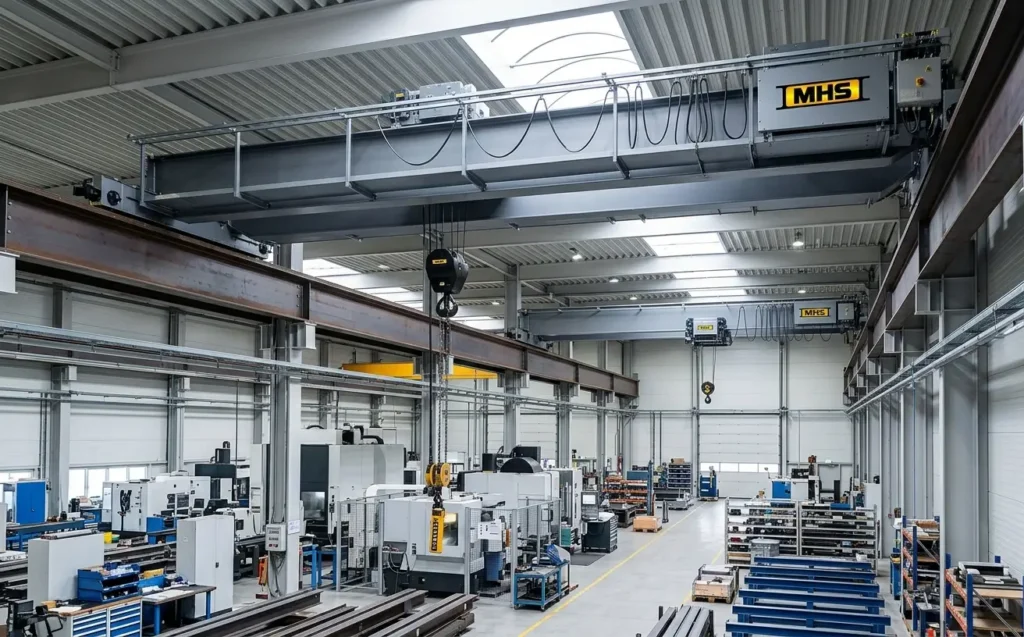
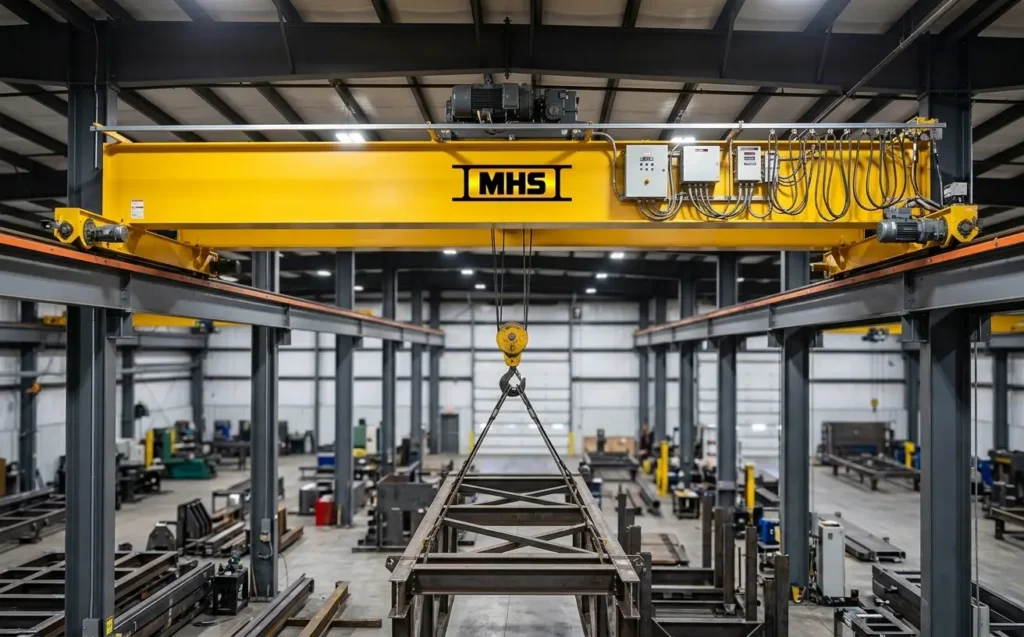
A single girder crane uses one main bridge girder and suits lighter loads, shorter spans, and simpler facility layouts. A double girder crane uses two parallel girders and handles heavier loads, longer spans, and...
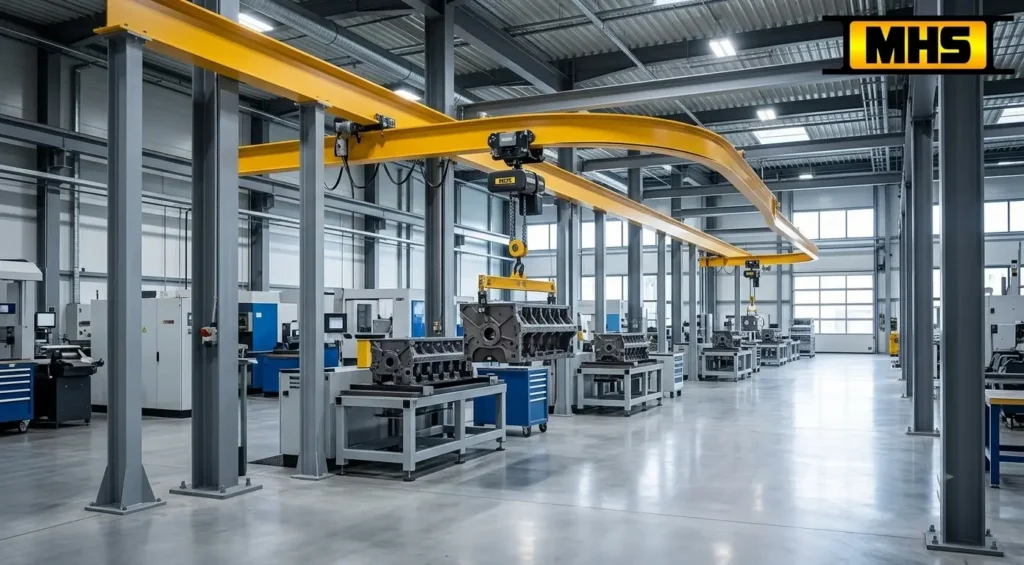
A monorail crane system is an overhead lifting system that uses a single fixed runway beam to move loads along a defined path. Manufacturing facilities, warehouses, and industrial plants use these systems to improve...
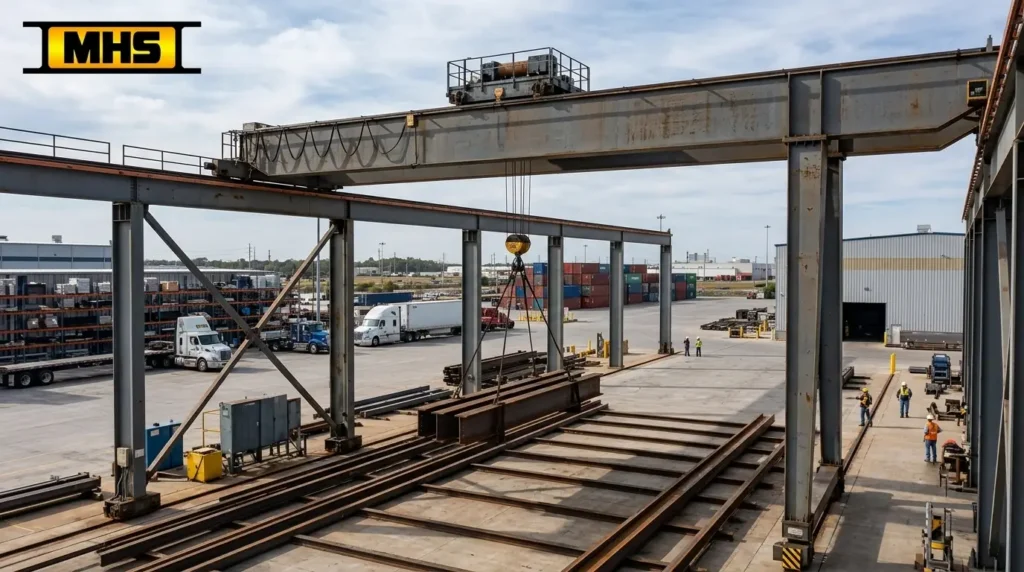
A gantry crane is a lifting system supported by freestanding legs that travel along rails, wheels, or tracks, and is used to lift and move heavy materials without relying on a building's structural support. TL;DR: ...
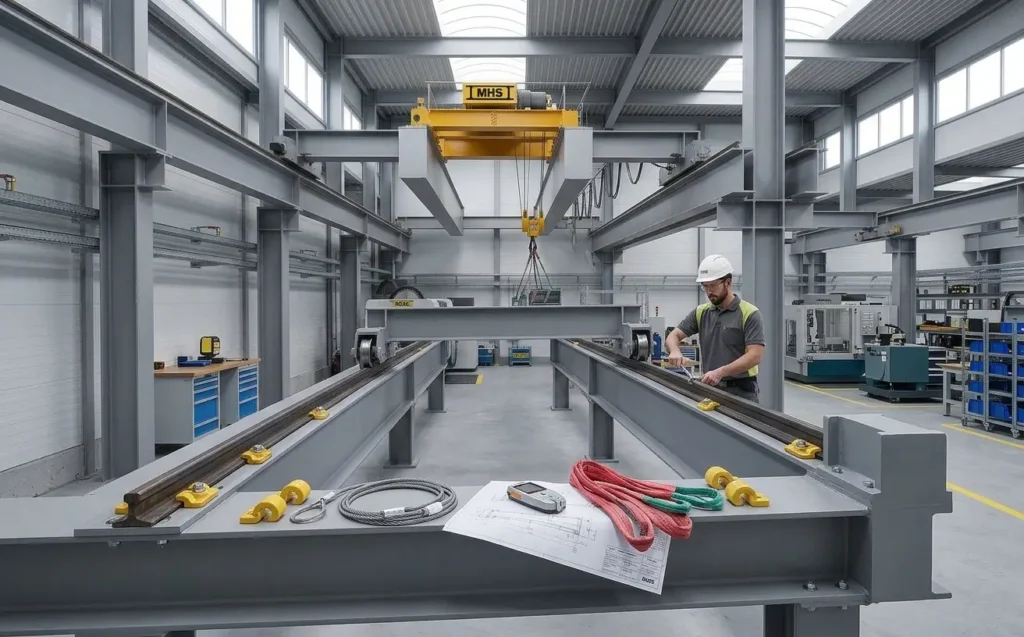
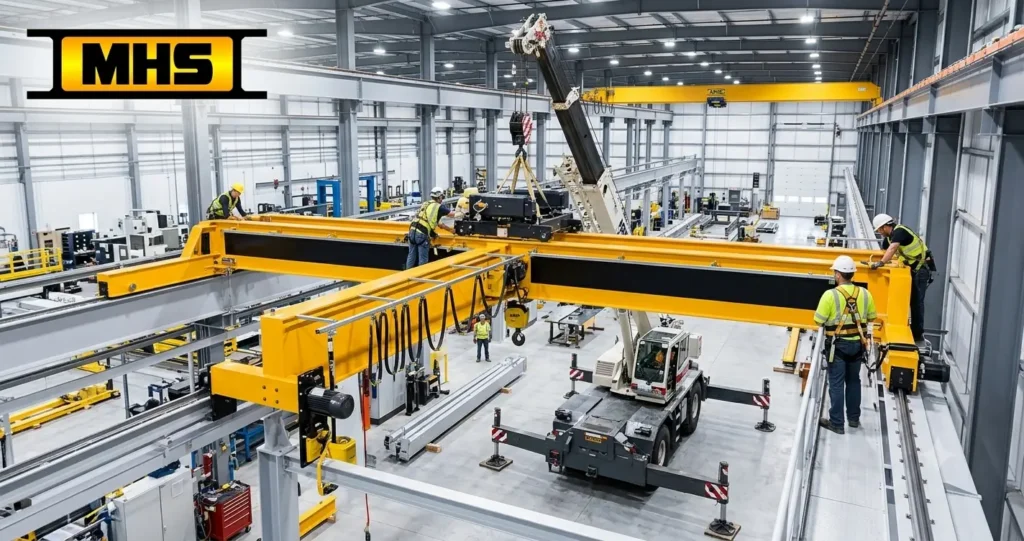
Overhead crane installation is the process of assembling, aligning, and securing a crane system — bridge, runway, hoist, and electrical components — to safely lift and move heavy loads in industrial facilities. In Short : ...
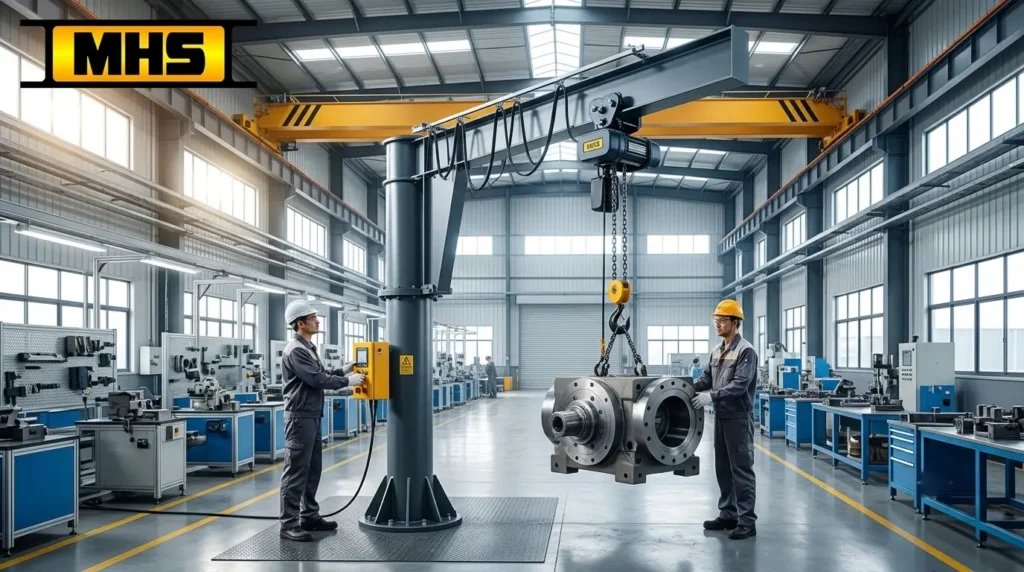
If you work in a warehouse, workshop, or manufacturing facility, you've probably seen a jib crane in action, even if you didn't know its name. These compact, reliable machines make lifting and moving loads...
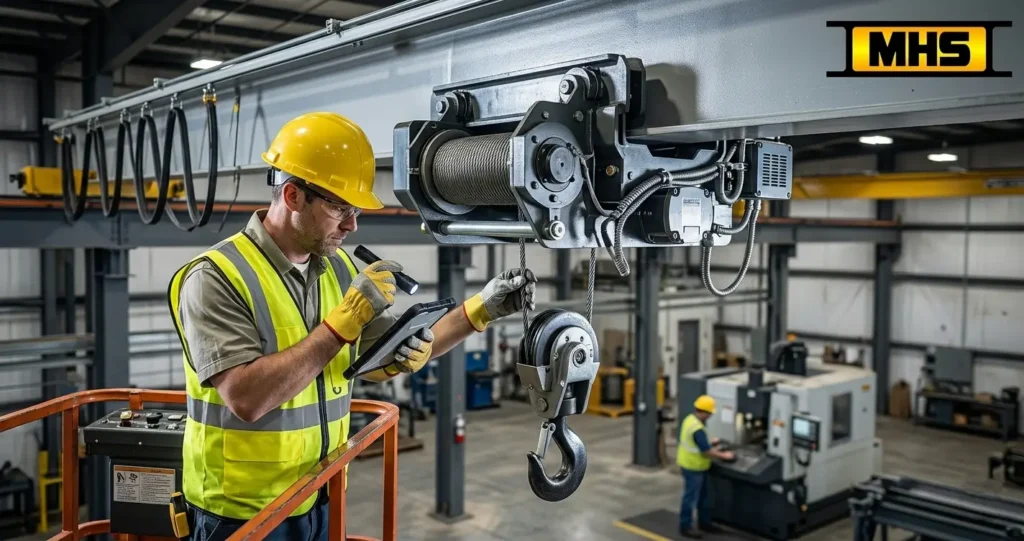
Overhead cranes must be inspected regularly to ensure safe operation and prevent equipment failure. OSHA overhead crane regulations require frequent and periodic inspections at intervals that depend on the crane, its critical components, use,...